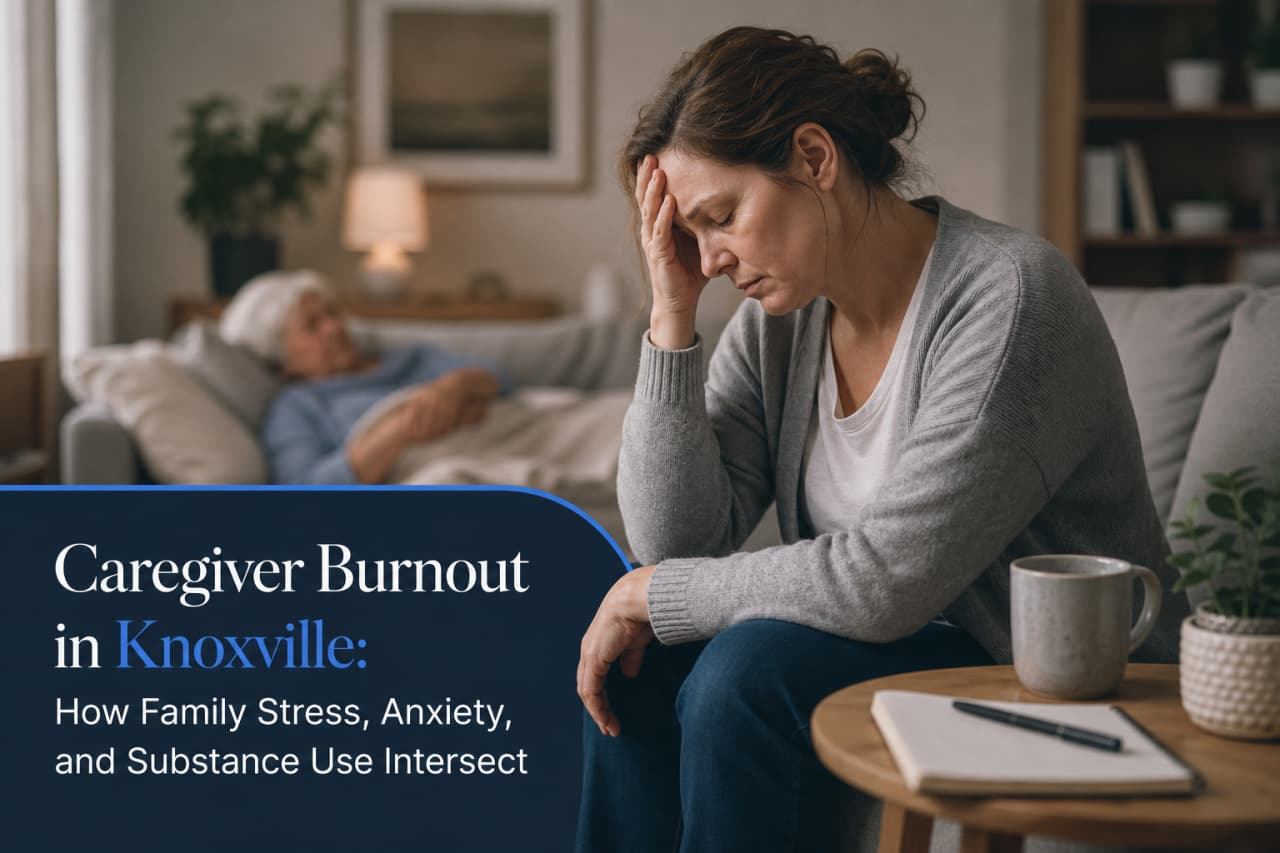
Caregiver Burnout in Knoxville: How Family Stress, Anxiety, and Substance Use Intersect
Taking care of a friend or family member can carry an emotional toll that many caregivers do not expect. As caregiving tasks, doctor’s appointments, physical demands, and a loved one’s illness take more time, it can become difficult to protect your own health, get enough sleep, and maintain emotional health. Caregiver burnout, caregiver burden, and compassion fatigue can feel overwhelming, making it important to understand how a caregiving situation can affect both you and the care recipient.
What Is Caregiver Burnout?
Caregiver burnout is a state of physical, mental, and emotional exhaustion caused by ongoing caregiving stress. It can develop when a person spends significant time caring for a family member or loved one while putting their own sleep, health, relationships, work, and personal needs aside. The constant demands of caregiving can lead to fatigue, irritability, difficulty concentrating, and feelings of being overwhelmed. Over time, untreated caregiver burnout can contribute to anxiety, depression, social isolation, physical health problems, and unhealthy coping behaviors such as alcohol or substance use.
Signs and Symptoms of Caregiver Burnout
- Physical Exhaustion: Persistent fatigue may continue even after rest.
- Emotional Exhaustion: Caregivers may feel overwhelmed, frustrated, drained, or feeling sad.
- Irritability: Stress can cause anger, impatience, or mood changes.
- Sleep Problems: Trouble falling asleep or staying asleep may occur.
- Loss of Interest: Hobbies and activities may become less enjoyable.
- Difficulty Concentrating: Burnout can affect memory and decision-making.
- Social Withdrawal: Caregivers may distance themselves from friends and family.
- Physical Symptoms: Headaches, muscle tension, or digestive problems may develop.
- Unhealthy Coping: Some caregivers may turn to alcohol, drugs, or medications.
What Causes Caregiver Burnout and Who Is Most at Risk?
Caregiver burnout can develop from long hours of caregiving, lack of sleep, financial pressure, limited support, difficult family relationships, and little time for personal needs, and risk may be higher when caregivers are supporting older adults or someone with Alzheimer's disease. Risk may also be higher for people who provide intensive or long-term care, live with the person receiving care, lack social support, or already experience significant stress.
Family caregivers may also struggle to separate their caregiving role from other responsibilities involving work, parenting, relationships, and personal health. Without enough rest or support, these demands can gradually affect both mental and physical well-being.
Caregiver Burnout vs. Caregiver Stress
Caregiver stress refers to the emotional and physical strain that can occur while caring for another person. Stress may improve with rest, support, or a temporary reduction in responsibilities, while caregiver burnout often involves deeper and more persistent exhaustion.
Burnout can develop when caregiver stress continues without enough recovery. A caregiver may begin to feel detached, hopeless, physically depleted, or unable to manage responsibilities that previously felt manageable.
Stages of Caregiver Burnout
- Increased demands: Caregiving responsibilities begin taking more time and energy from work, relationships, sleep, and personal needs.
- Ongoing stress: The caregiver may experience frequent worry, irritability, fatigue, and difficulty relaxing.
- Reduced self-care: Exercise, healthy meals, medical appointments, hobbies, and social activities may receive less attention.
- Emotional exhaustion: Anxiety, frustration, sadness, resentment, or feelings of helplessness may become more frequent.
- Burnout: Severe exhaustion, withdrawal, reduced motivation, and difficulty providing care may interfere with daily life.
How Caregiver Burnout Affects Mental and Physical Health
Caregiver burnout can affect mood, concentration, energy, appetite, sleep, and the ability to manage stress. Persistent strain may contribute to headaches, muscle tension, digestive problems, fatigue, and other physical symptoms, and may worsen existing health conditions.
Mental health may also decline as caregiving demands continue. A caregiver who feels overwhelmed for an extended period may experience anxiety, depression, isolation, or unhealthy coping behaviors that require additional support.
Caregiver Burnout and Anxiety, Depression, and Sleep Problems
Chronic caregiving stress can contribute to persistent worry, sadness, irritability, hopelessness, and difficulty concentrating. Anxiety and depression can also make caregiving responsibilities feel harder to manage and reduce motivation for self-care.
Sleep problems may develop because of stress, nighttime caregiving duties, or constant concern about a loved one. Poor sleep can then increase fatigue, emotional distress, and difficulty coping with daily demands.
How Caregiver Burnout Can Affect the Quality of Care
Severe burnout can make it harder for caregivers to remain patient, focused, and consistent. Exhaustion may contribute to missed appointments, medication mistakes, communication problems, or difficulty recognizing changes in a loved one's needs.
Burnout does not mean a caregiver does not care about their loved one. It can signal that caregiving demands have exceeded the person's available time, energy, or support.
Caregiver Burnout and Social Isolation
Caregiving responsibilities can reduce the time available for friends, family relationships, hobbies, and community activities. Some caregivers may also feel that other people do not understand their responsibilities, which can make withdrawal more likely. If leaving home is difficult, invite friends over or stay connected through online groups, since many online groups can reduce isolation when in-person contact is hard.
Social isolation can remove important sources of emotional and practical support. Maintaining relationships, sharing responsibilities, and asking for help can give caregivers opportunities to rest and stay connected.
Prevalence and Statistics of Caregiver Burnout
Millions of Americans provide unpaid care for family members and other loved ones, making caregiver stress a widespread health concern. Burnout rates vary by population, caregiving demands, hours of care, and how researchers define caregiver burnout.
Effects and Risks of Caregiver Burnout
Short-Term Effects
- Fatigue
- Irritability
- Anxiety
- Sleep problems
- Difficulty concentrating
- Headaches and muscle tension
- Social withdrawal
- Increased substance use
Long-Term Effects
- Chronic exhaustion
- Depression and anxiety disorders
- Ongoing sleep problems
- Declining physical health
- Family and relationship conflict
- Social isolation
- Substance misuse or addiction
- Reduced ability to provide consistent care
How Caregiver Burnout Affects Family Relationships and Daily Life
Caregiver burnout can increase irritability, resentment, emotional withdrawal, and communication problems within families, including with a supportive family member. Ongoing exhaustion may create conflict with partners, children, siblings, or the person receiving care and leave less time for important relationships.
Burnout can also make it harder to manage work, household tasks, appointments, finances, parenting, self-care, and other daily responsibilities.
Caregiver Burnout, Unhealthy Coping, and Substance Use
Some caregivers may cope with chronic stress, anxiety, exhaustion, or sleep problems through alcohol, drugs, overeating, isolation, or prescription medication misuse. Benzodiazepines, sleep medications, opioid pain medications, and stimulants may provide temporary relief but can worsen mood, sleep, judgment, and relationships while increasing the risk of dependence and substance use disorders.
Caregiver Burnout and Co-Occurring Mental Health and Substance Use Disorders
Caregiver burnout may occur alongside generalized anxiety disorder, major depressive disorder, panic disorder, post-traumatic stress disorder, or insomnia. Substance-related conditions may include alcohol use disorder, opioid use disorder, sedative use disorder, stimulant use disorder, or prescription drug misuse.
When mental health and substance use problems occur together, treating both can help address the symptoms and coping behaviors affecting daily life.
Healthy Coping Skills and Boundaries for Caregiver Stress
Healthy coping can include regular sleep, exercise, balanced meals, relaxation techniques like deep breathing, social connection, and time away from caregiving responsibilities. Caregivers can also set boundaries by asking for help, sharing responsibilities, protecting personal time, spend time on personal activities, and being realistic about what they can manage.
Benefits of Family Support, Therapy, and Support Groups
- Reduced Isolation: Connection can help caregivers feel less alone.
- Emotional Support: Caregivers have a place to discuss stress and difficult emotions.
- Healthier Coping: Therapy can teach practical ways to manage stress and anxiety.
- Better Communication: Families can learn to discuss needs more clearly.
- Shared Responsibilities: Support can reduce the burden on one caregiver.
- Earlier Intervention: Professional support can identify worsening mental health or substance use.
In addition, most support groups help caregivers connect with people facing similar challenges. For added guidance and support for family caregivers, the Family Caregiver Alliance and the Caregiver Help Desk can also help people navigate health care resources.
How Self-Care, Respite, and Shared Responsibilities Can Reduce Burnout
Self-care gives caregivers time to address sleep, physical health, relationships, and emotional needs before stress becomes harder to manage. Respite services can support your own efforts to manage appointment dates, and accepting help or expressing gratitude does not make you a bad caregiver.
Even a few hours of respite care can help reduce stress. Regular exercise, healthy meals, hobbies, social connection, and time away from caregiving can support recovery from daily stress. Respite care through in-home support, adult day programs, nursing homes, and guidance from the Caregiver Help Desk can provide regular breaks, while responsibilities should be shared among as many family members as possible to reduce constant demands and create a healthier balance between caregiving and personal life.
How Outpatient Treatment and IOP Can Support Caregivers
Outpatient treatment can help caregivers address anxiety, depression, chronic stress, substance use, and unhealthy coping while continuing many work, family, and caregiving responsibilities. Therapy can help caregivers identify stress triggers, set boundaries, improve coping skills, and manage difficult emotions.
An intensive outpatient program, or IOP, provides more structured and frequent support when standard outpatient care is not enough.
How to Help a Family Member Experiencing Caregiver Burnout
Talk openly about the caregiver's stress and listen without criticizing how they manage their responsibilities. Offer specific help with meals, transportation, appointments, household tasks, errands, or caregiving shifts so the person has time to rest and address personal needs.
Encourage professional support when burnout begins affecting mental health, physical health, relationships, substance use, or daily functioning.
When to Seek Help
Professional help may be needed when caregiver stress causes persistent anxiety, depression, severe sleep problems, isolation, relationship problems, or difficulty managing daily responsibilities.
Immediate support is important if a caregiver has suicidal thoughts, cannot safely provide care, or increasingly relies on alcohol, drugs, or prescription medications to cope.
Treatment Options for Mental Health and Co-Occurring Substance Use Disorders
Individual Therapy
Addresses anxiety, depression, stress, grief, and unhealthy coping.
Group Therapy
Provides structured support and opportunities to develop coping skills.
Family Therapy
Addresses communication, boundaries, conflict, and family responsibilities.
Medication Management
May help treat certain mental health or substance use conditions.
Outpatient Treatment
Provides ongoing care while allowing patients to maintain many daily responsibilities.
Intensive Outpatient Programs
Intensive Outpatient Programs provide structured treatment for people who need more frequent support.
Residential Treatment
Provides greater structure for people who require a higher level of care.
Dual Diagnosis Treatment
Dual Diagnosis Treatment treats mental health and substance use disorders at the same time.
Does Insurance Cover Treatment?
Many insurance plans may cover mental health, substance use, outpatient, and IOP services when treatment is medically necessary. Coverage varies based on the insurance plan, provider network, diagnosis, level of care, and authorization requirements.
Conclusion
Caregiver burnout can affect stress levels, self esteem, sleep, physical activity, and the ability to properly care for yourself and a loved one. Trouble sleeping, frequent headaches, feeling tired or sad, losing interest, or losing weight can signal that the emotional weight and physical demands of taking care of someone are becoming too much.
A mental health professional, caregiver support group, respite care services, adult day care centers, nursing services, local resources, or other family members can provide a support system and a temporary break when caregivers seek support.
Seeking Treatment? We Can Help!
At New Hope Healthcare, as an in-network provider we work with most insurance plans, such as:
If you or a loved one are struggling with mental health challenges or substance abuse, seeking treatment and emotional support is crucial.
Consulting a doctor can provide the necessary support and guidance for your teen. Reach out to New Hope Healthcare today. Our team of compassionate professionals is here to support your journey towards lasting well-being.
Effective medication management is a crucial part of the treatment process to ensure safety and success.
Give us a call at 866-799-0806.
FAQs
What Are the Signs of Caregiver Burnout?
Common signs include exhaustion, irritability, anxiety, sleep problems, withdrawal, and difficulty managing daily responsibilities.
Can Caregiver Burnout Cause Anxiety and Depression?
Yes. Long-term caregiver stress can contribute to anxiety, depression, emotional exhaustion, and other mental health problems.
How Can Caregiver Burnout Be Treated?
Treatment may include therapy, support groups, healthier boundaries, respite care, and professional mental health treatment when symptoms become severe.
People Also Ask
Can Caregiver Burnout Lead to Substance Use?
Yes. Some caregivers may use alcohol, drugs, or prescription medications to cope with chronic stress, anxiety, or sleep problems.
How Long Does Caregiver Burnout Last?
Burnout can continue while ongoing stress remains unmanaged, but support, boundaries, rest, and treatment can help reduce symptoms.
When Should a Caregiver Seek Professional Help?
Seek help when stress affects mental health, physical health, relationships, daily functioning, or leads to unhealthy substance use.
Sources