
Substance Use Disorders
Substance abuse issues we treat
Explore condition-specific resources for alcohol, opioids, stimulants, prescription medications, and polysubstance use — with outpatient programs in Knoxville.
Substances we treat
Substance-Specific Resources
Each page covers how we approach treatment, typical levels of care, and what families can expect from admissions.
Outpatient focus
Addiction treatment without leaving your community
Our PHP, IOP, and outpatient tracks are designed for people who need intensive support while staying connected to home, work, and family across East Tennessee.
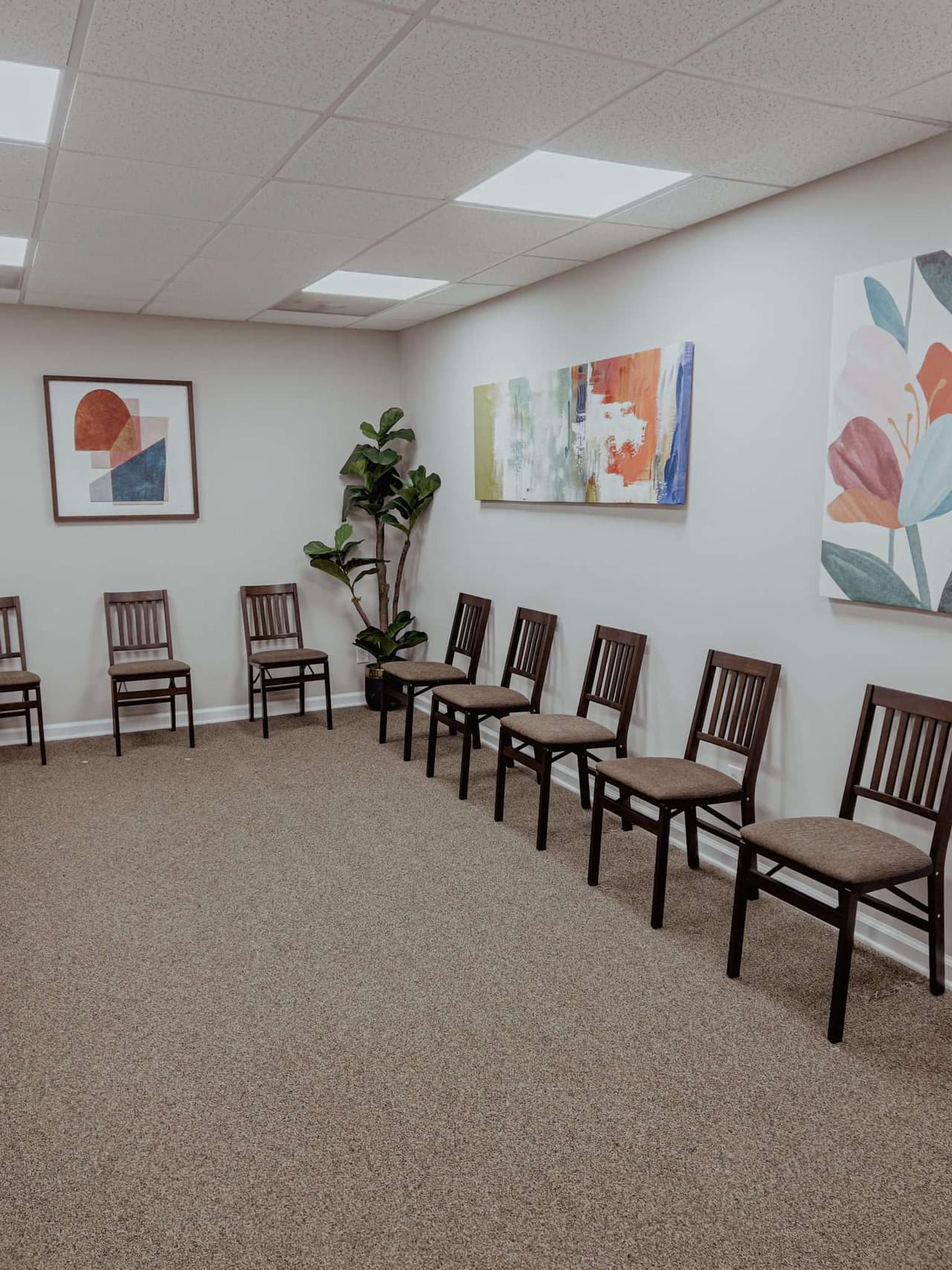
How substance use levels of care differ
Substance use treatment in Knoxville is organized by how many hours you spend in therapy each week. A partial hospitalization program fills the day and sends you home at night. An intensive outpatient program meets several days a week for a shorter block. Standard outpatient is fewer hours, often one or two sessions in the week.
You do not have to name your level of care before you call admissions. A clinician looks at use, withdrawal risk, mental health symptoms, and support at home. From that picture, the clinician recommends PHP, IOP, outpatient, or a partner setting. The recommendation can change as you stabilize and as home support changes.
Partial hospitalization and intensive outpatient
The partial hospitalization program in Knoxville is for people who need a full treatment day and a safe place to sleep that is not a hospital bed. Group therapy, individual counseling, and relapse-prevention planning are typical parts of that day. The exact mix is set after the assessment, and it is not the same list for every person.
The intensive outpatient program in Knoxville fits people who must keep a job, a class, or childcare and still need more than a weekly hour. You live at home and attend on a set schedule the team gives you. If the week feels too light and use is climbing, the team can talk about stepping up to PHP.
IOP usually means several sessions in a week, not a single check-in. You should expect group therapy plus individual time, and you should ask how absences are handled before you enroll. If opioids are involved, ask whether medication support can sit inside the same week. If alcohol withdrawal has included seizures, confusion, or a past hospital stay, say that before anyone talks about an outpatient start.
A useful week is a schedule you can keep without missing the groups you agreed to attend. If work ends at five, ask about evening IOP before you agree to a morning PHP you will miss. Missed days matter clinically, because the level only helps when you are in the room.
Evening, virtual, and medication support
Virtual IOP is for people who can do the work by secure video when the clinician agrees it is appropriate. Evening IOP is the same intensive level, moved to a later clock for working days. Neither evening nor virtual care is a shortcut you pick to avoid the building. Fit for those schedules is decided in the assessment, not by preference alone.
Medication-assisted treatment in Knoxville pairs counseling with a medication a prescriber may recommend for opioid use disorder or alcohol use disorder. Suboxone, a brand of buprenorphine plus naloxone, is one opioid option that may be discussed. It is not assigned from this page, and it is not the right medication for every person.
If withdrawal could be medically dangerous, say that on the first call. Medical detox and residential care may be arranged with a partner when this campus is not the right setting. The inpatient drug rehab page explains how admissions handles that handoff to a partner.
Standard outpatient rehab in Knoxville is the step down after IOP for many people who no longer need several sessions a week. It can also be the start when the assessment says that heavier week is more than you need. You keep living at home, and the lighter week still depends on attending every session you accept.
Condition pages and the first call
After the level is clear, open the condition page that matches the substance. Alcohol use disorder treatment, opioid use disorder treatment, cocaine treatment, and methamphetamine treatment each describe effects and the path into a program. Those pages should point you to a program, and they do not replace the program page.
Dual diagnosis treatment belongs in the plan when a mental health condition is active beside substance use. Ask for that combined plan by name if both problems are active for you. A plan that treats only the substance and leaves the other symptoms untouched is a common reason people return to use.
Call 865-800-0947 and ask whether a same-day assessment is open when there is room. Admissions can start a benefits review, and those benefits vary by plan. That review is not a guarantee of payment, network status, or admission to a program. If you want the benefits check before you travel, verify your insurance.
New Hope Healthcare Institute is accredited by The Joint Commission and licensed by the Tennessee Department of Mental Health and Substance Abuse Services. You will find the office at 100 Glenleigh Court, suite 101, Knoxville. You can call for yourself, and a family member can call without putting your medical history into a form.
Related care
Programs & next steps
After choosing a condition, explore levels of care, dual diagnosis support, and insurance verification.
Ready to take the first step?
Wherever you're starting from, admissions can usually happen same-day. One call starts everything.