

Guides
November 19, 202610 min read
Does Insurance Cover Family Therapy for Addiction?
You'll learn why family sessions are usually billed under your loved one's plan, not yours, and what to ask before the first session.
NHH
New Hope HealthHIPAA-compliant · Same-day admissions available
Learn the signs that a member's drinking, drug use, or mental health needs more than pastoral counseling, and how to hand them to a clinical team while staying part of their life.
New Hope Health
Editorial Team
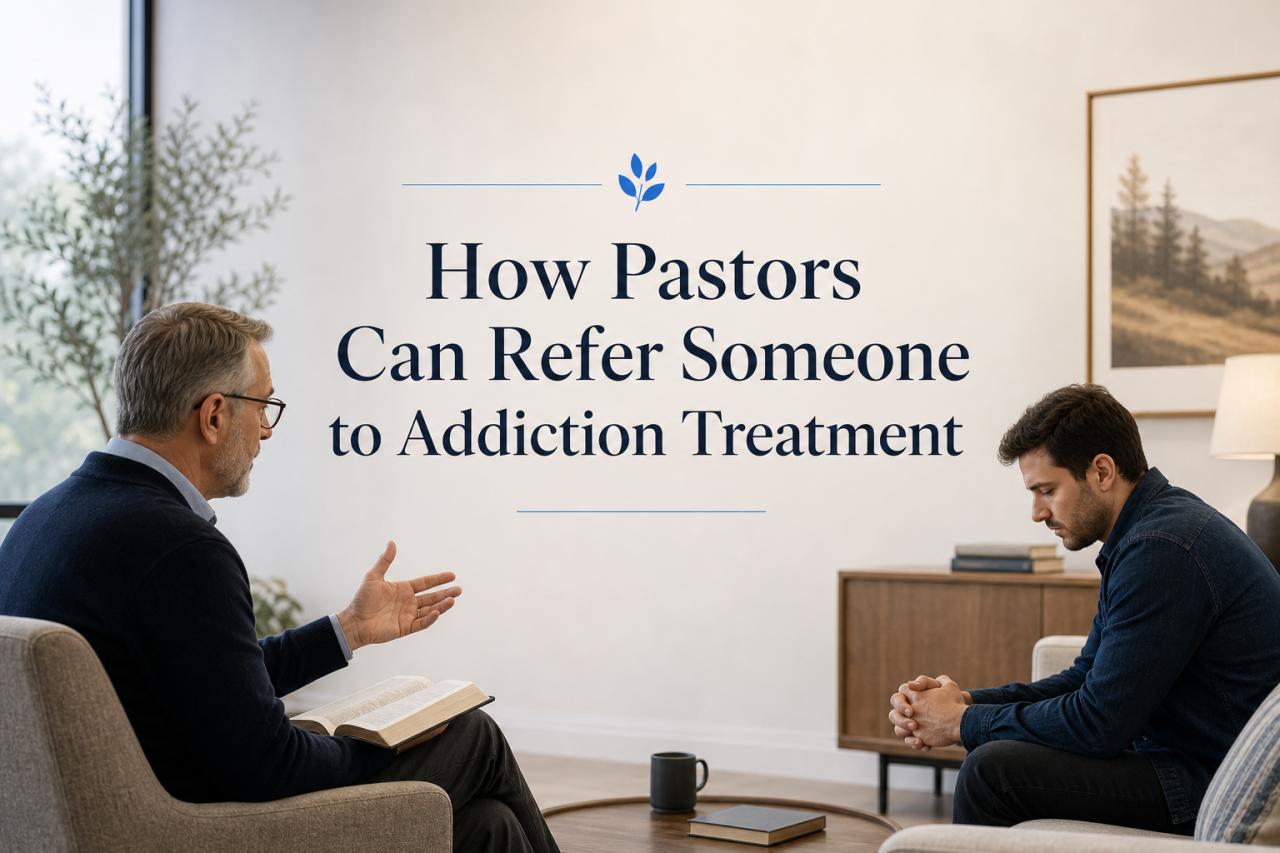
When a member's drinking, drug use, or mental health has outgrown what counseling and prayer can carry, the best move is to help them call a clinical team, with their consent. You don't have to diagnose anything or stop being their pastor. Your part is to make the first handoff warm and then stay close as spiritual support.
If you or someone you love is thinking about suicide or self-harm, call or text 988 any time, day or night. You can also chat with a trained crisis counselor at [988lifeline.org](https://988lifeline.org). If someone is in immediate danger, call 911.
Four signs usually tell you a situation needs a clinical team. The first is withdrawal risk. A person who drinks every day or uses opioids or benzodiazepines regularly can become physically ill, even endangered, if they stop abruptly, and no amount of prayer or accountability makes quitting alone safe. If your member describes shaking, sweating, or seizures after missing a drink or a dose, they need medical guidance before they try to quit.
The second sign is repeated failed attempts to cut back. When someone has promised their spouse, their small group, and themselves that they'll stop, and the pattern keeps returning, the problem is rarely a lack of faith or effort. That cycle is exactly what a clinical assessment is for.
Third, watch for safety concerns, such as driving under the influence, using around children, or talk of not wanting to be alive. Fourth, listen for depression, anxiety, or trauma symptoms that came before the drinking or drug use or got worse alongside it. Dual diagnosis care treats both together, which matters because treating only one often leaves the other driving a return to use.
You can't confirm any of this by yourself, and nobody expects you to. A licensed clinician completes a confidential assessment at admissions and recommends a level of care, whether that's partial hospitalization, intensive outpatient, or weekly outpatient. If the assessment shows the person needs a level of care New Hope doesn't provide, admissions can talk through referral options.
Your job is simpler. Notice the pattern, name your concern kindly, and offer to help make the call. For background on how addiction and treatment work, the National Institute on Drug Abuse explains that addiction is a treatable condition and that recovery often takes ongoing support.
Pick a private moment, ideally somewhere other than the hallway after a service, and begin with what you've noticed rather than what you suspect. Saying "I've seen you looking worn down, and I care about how you're doing" gives the person room to answer. Saying "I think you have a problem" usually ends the conversation.
Use person-first language the way you'd want it used about you. Say "a person with a substance use disorder" or "someone who's trying to stop drinking," and avoid labels like addict or alcoholic, which can sound like a verdict to someone already carrying shame. Phrases that frame use as a moral failure teach people they can't come to you honestly.
Some members will deflect, minimize, or get angry. You don't need to win the point. A calm "I'm not going anywhere, and I'd like to help you talk to someone who does this for a living" leaves the door open for a second conversation. Questions that invite them to speak, such as "What's been hardest lately?", work better than ultimatums.
Describe treatment plainly. The first step at New Hope is an assessment with a licensed clinician, and agreeing to it doesn't mean signing up for a program. The conversation is confidential. If the person worries that treatment will cost them their standing in the congregation, tell them what you'll keep private, and then keep that promise.
Ask before you act. A question like "Would you be willing to call together this week?" keeps the decision with them. If they say yes, the next step is the call itself, which our guide to how admissions works at New Hope walks through.
A warm handoff means you stay on the line, or in the room, while the person makes first contact, so they never have to explain their situation to a stranger alone. Get their consent first, then sit with them while they call or text admissions. You can find the contact options on the admissions page.
Admissions moves in four steps. It starts with initial contact by phone or text, then insurance verification, a confidential clinical assessment with a licensed clinician, and treatment planning done together with the person. Knowing that order helps you prepare them. The first conversation covers basic information, not a confession, and nothing requires them to commit to a program on that call.
Have a few things ready before you dial. Bring the person's insurance card, a short list of the substances they use and how often, and any medications they take. If they're comfortable, mention any depression, anxiety, or trauma history, since the clinician will want the full picture. If they'd rather speak for themselves, let them, and stay nearby.
Insurance questions come up early. New Hope offers free, confidential insurance verification, and you can start it through the verify your insurance page. Benefits vary by plan, and verification isn't a guarantee of payment, clinical eligibility, or admission, so tell the person that plainly rather than promising coverage.
With the person's permission, you can share what you've observed, but the clinical team decides what level of care fits. Afterward, keep what you learned private, including from church staff and prayer chains, unless the person tells you otherwise. That confidentiality is what makes them willing to come back to you.
Ask the person what kind of contact they want before you visit, call, or announce anything to the congregation. Some people welcome a pastor at the next family session, while others need a few weeks of privacy before they're ready to see anyone from church. Either way, you can send a short note or text saying you're praying for them and don't expect a reply. That costs them nothing to receive.
New Hope lists family involvement as a stated value, delivered through family therapy and support groups. If your member's spouse or parents are taking part, you can support them too by checking in, bringing a meal, or sitting with them after a hard week. Families often carry as much shame as the person in treatment, and a pastor who shows up without questions makes a real difference.
Prayer and visits should sit alongside treatment, not compete with it. Day programs and intensive outpatient schedules fill much of the week, so ask what time and energy the person has left before you suggest a Bible study or small group. Don't press for details about what's said in therapy. If they want to share, they will.
Some members find the structure of 12-step treatment familiar, since its emphasis on honesty, accountability, and reliance on a higher power often overlaps with what you teach. You can encourage that without turning it into a spiritual test.
Plan for the step-down, too. When the person moves to a lower level of care after reassessment, the clinical team builds a transition plan, and your congregation becomes part of daily life again. Offer rides, a standing coffee, or a seat beside them on Sunday, and keep it low-pressure so they can rebuild at their own pace.
New Hope, a Joint Commission accredited program in Knoxville, offers an optional faith-integrated track for clients who want their faith included in treatment, and the faith-based page lists Biblical-focused group therapy as part of it. Nobody is placed in it automatically. A person opts in, and someone who'd rather keep treatment secular can do that without anyone questioning it.
The track sits alongside the clinical work rather than in place of it. Licensed clinicians lead care built on evidence-based therapies such as CBT, DBT, EMDR, and motivational interviewing, along with individual, group, and family therapy and relapse prevention planning. A client who chooses the Biblical-focused group takes part on top of that foundation, so prayer and scripture never stand in for a treatment plan.
Before the assessment, you can ask your member one thing: "Do you want your faith to be part of this?" Some people badly want it. Others feel conflicted or hurt by past experiences in church and need space to answer honestly. Whichever they choose, they can say so during the clinical assessment, and if they change their mind later, they can raise it with their care team.
It also helps to tell the person what the track isn't. It isn't a spiritual test, and it doesn't require them to speak about their beliefs in any particular way. If you're comparing several programs for a member, our post on questions families should ask when comparing Knoxville rehabs gives you a practical list to bring to each conversation.
In a crisis, safety comes first and the referral conversation waits. A pastor's office isn't equipped to manage an overdose or a medical withdrawal, and a trained dispatcher or crisis counselor can guide you while help is on the way.
While you wait, keep your voice calm and your questions direct. Asking "Are you thinking about ending your life?" doesn't plant the idea, and it tells the person they can be honest with you. Don't take anything from them by force, and don't leave them alone. If other people are in the room, ask them to step out so the person can speak freely.
Once the immediate danger has passed, emergency staff or a crisis counselor may recommend an evaluation, and you can offer to sit with the person and their family while they decide what comes next.
Afterward, check on yourself and your care team. Crisis calls are heavy, and you shouldn't carry the aftermath alone. Share only what the person has allowed you to share, even with trusted staff.
When the person is stable and willing, you can reach admissions together through the admissions page. You can also check benefits ahead of time through the verify your insurance page, which is free and confidential. Benefits vary by plan, and this is educational information, not legal or financial advice.
Selected references: National Institute on Drug Abuse, Treatment and Recovery; 988 Suicide & Crisis Lifeline.
In This Article
Tags
You'll learn why family sessions are usually billed under your loved one's plan, not yours, and what to ask before the first session.

You can keep your job and still get structured treatment, and you'll see how a 5:00 to 8:00 PM schedule fits a normal work week.

You'll see how a health plan approves IOP or PHP, from the first assessment through re-review, and which delays are normal.

The signs of depression in men are not always easy to recognize, especially when emotional problems affect behavior, relationships, and daily life.

Have you ever poured a glass of wine after a long day, planned on one drink, but ended up having three drinks before the night was over?
Discover non addictive anxiety medication options, including SSRIs, SNRIs, and buspirone, and learn how therapy can support anxiety treatments during recovery.


New Hope Healthcare Institute offers confidential admissions support for addiction and mental health care—adults and teens—in Knoxville. Call or text 24/7. Verification is not a guarantee of coverage or admission.