A mental health or addiction crisis can change how safe a home feels, especially when firearms, medications, and other potentially dangerous items are within reach. For Knoxville families facing mental health challenges, knowing how to respond can make a life-saving difference. So, what does lethal means safety involve, and how can families protect loved ones without creating more stress during an already difficult time?
What Is Lethal Means Safety and Why Is It Important?
Lethal means safety is a suicide prevention strategy that reduces access to firearms, medications, and other potentially deadly items during a mental health or addiction crisis. It involves secure storage, temporary removal of dangerous items, and safety planning to reduce the risk of suicide, self-harm, and overdose. Because suicidal crises can develop quickly, research shows limiting access to lethal means can prevent impulsive actions, give individuals time to receive help, and save lives. Approximately 90% of people who survive a suicide attempt do not go on to die by suicide later. Lethal means safety is especially important for individuals experiencing depression, suicidal thoughts, substance abuse, or other mental health conditions that increase suicide risk. Families, caregivers, and healthcare providers can work together to create safer environments while individuals receive treatment and ongoing support.
Warning Signs of a Mental Health or Addiction Crisis
A mental health or addiction crisis can involve sudden changes in behavior, emotions, or substance use that increase the risk of self-harm or suicide. Common warning signs include:
- Suicidal thoughts or talking about death
- Feelings of hopelessness or worthlessness
- Severe depression, anxiety, or mood swings
- Increased alcohol or drug use
- Social withdrawal and isolation
- Giving away possessions or saying goodbye
- Reckless or impulsive behavior
- Major changes in sleep or personal hygiene
- Searching for suicide methods or accessing firearms or medications
Mental Health Conditions Associated With Increased Suicide Risk
Mental health conditions associated with increased suicide risk include major depressive disorder, bipolar disorder, post-traumatic stress disorder (PTSD), schizophrenia, borderline personality disorder, and severe anxiety disorders. Symptoms such as hopelessness, psychosis, impulsivity, and emotional distress may increase risk, especially among individuals with previous suicide attempts or co-occurring substance use disorders.
The Connection Between Substance Abuse, Addiction, and Suicide Risk
Alcohol, opioids, benzodiazepines, cocaine, and methamphetamine can increase suicide risk by affecting judgment, impulse control, and emotional stability. Alcohol can lower inhibitions, opioids such as fentanyl and heroin carry serious overdose risks, and benzodiazepines such as Xanax can cause dangerous sedation. Cocaine and methamphetamine may trigger paranoia, agitation, depression, or psychosis.
People with co-occurring mental health and substance use disorders face additional risks during intoxication, withdrawal, and relapse. Treatment that addresses both conditions can support suicide prevention and long-term recovery.
How to Reduce Access to Other Potentially Lethal Means During a Crisis
Lethal means safety extends beyond firearms and medications to include sharp instruments, toxic chemicals, pesticides, and other dangerous household items. Families should secure or temporarily remove these items, address specific risks identified in a suicide safety plan, and consult mental health professionals about additional precautions.
How to Practice Lethal Means Safety at Home
Families can reduce suicide and overdose risks by limiting access to dangerous items during a mental health or addiction crisis. Important safety measures include:
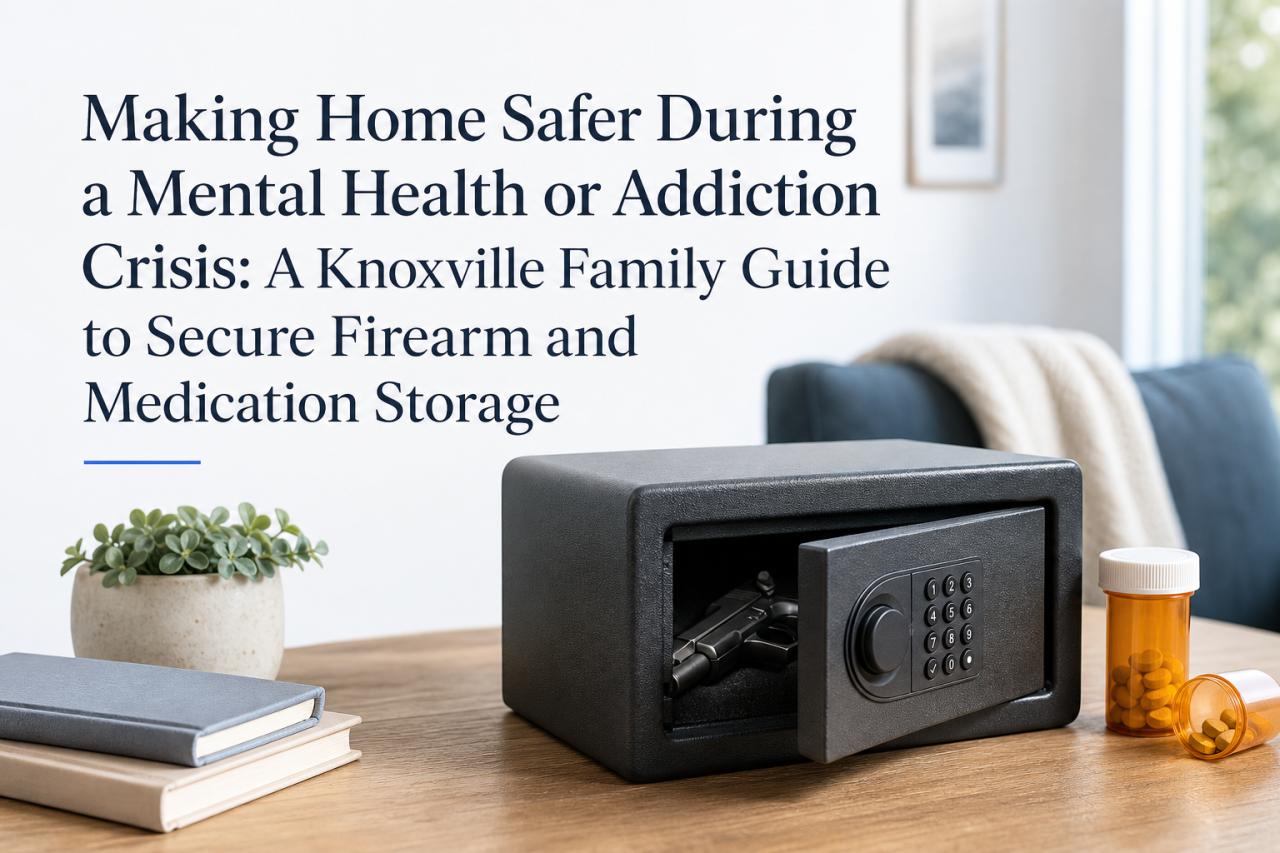
- Lock firearms and store ammunition separately.
- Arrange temporary off-site firearm storage when appropriate.
- Secure prescription and over-the-counter medications.
- Dispose of unused medications through take-back programs.
- Restrict access to alcohol, drugs, and toxic chemicals.
- Create a suicide safety plan with emergency contacts.
- Review household safety measures regularly.
What to Do When Someone Refuses to Give Up Access to Firearms or Medications
If someone refuses to restrict access to firearms or medications, family members should remain calm, explain their concerns, and avoid confrontation. A mental health professional or crisis counselor can help discuss safe storage options and work toward mutually agreeable solutions for temporarily restricting access as part of a safety plan. Never attempt to forcibly remove a firearm, and call 911 if there is immediate danger.
Prevalence of Firearm-Related Suicides and Medication Overdoses in Tennessee
Tennessee recorded 1,279 suicide deaths in 2023, with firearms involved in approximately 69% of cases and poisoning accounting for 8%. In 2024, the state recorded approximately 816 firearm suicides and 2,499 drug overdose deaths. These figures highlight the importance of lethal means safety, suicide prevention, and access to mental health treatment. Drug overdose deaths include both accidental and intentional overdoses, and approximately 70% of fatal overdoses in Tennessee in 2023 occurred at home.
Effects and Risks of Unsecured Firearms and Medications During a Crisis
Short-Term:
- Impulsive suicide attempts or self-harm
- Accidental firearm injury or death
- Medication overdoses and poisoning
- Increased danger during intoxication or psychosis
- Accidental access by children or teenagers
Long-Term:
- Permanent disability from a firearm injury
- Brain damage following severe overdoses
- Chronic physical or neurological complications
- Psychological trauma among family members
- Increased risk of future suicide attempts
Safe Firearm Storage and Temporary Removal During a Mental Health Crisis
Safe firearm storage reduces access during suicidal thoughts, emotional distress, or substance intoxication, as firearms are among the most lethal suicide methods. Safe storage practices include keeping firearms unloaded, locked in safes, and separate from ammunition. During a crisis, temporary off-site storage with a legally authorized person or facility may offer greater protection. Suicide prevention efforts, including veteran suicide prevention, encourage cable locks and restricted access to lethal means of suicide when serious mental illness, violent behavior, or other life-threatening behavior raises concern that someone may attempt suicide.
Families should follow Tennessee firearm laws and consult healthcare professionals about safe storage. During an immediate threat, contact emergency services rather than forcibly removing a firearm. Firearm access to a highly lethal method can be reduced with free safety locks or, in states that allow them, extreme risk protection orders.
Safe Medication Storage and Disposal to Prevent Overdose and Self-Harm
Prescription medications, over-the-counter drugs, and controlled substances should be stored in locked cabinets to prevent intentional or accidental overdoses. Families can limit access to necessary doses, monitor medication use, and dispose of unused or expired medications through authorized drug take-back programs. Opioids, benzodiazepines, antidepressants, and sleep medications require particular attention during a mental health crisis.
How to Keep Children and Teens Safe During a Mental Health Crisis
Children and teenagers experiencing depression, suicidal thoughts, bullying, trauma, or substance abuse may face increased self-harm risks. Parents should secure firearms, medications, and other dangerous items while monitoring behavioral changes and maintaining open communication. A mental health professional can help families create age-appropriate safety plans and determine when additional supervision or treatment is necessary.
How to Maintain Lethal Means Safety After a Mental Health Crisis
Lethal means safety should continue after immediate suicidal thoughts or emotional distress improve because suicide risk may return. Families should maintain secure firearm and medication storage, review safety plans, monitor warning signs, and encourage ongoing mental health treatment. Healthcare providers can help determine when changes to temporary safety restrictions may be appropriate.
The Role of Lethal Means Safety Counseling in Suicide Prevention
Lethal means safety counseling helps individuals and families identify dangerous items and develop practical strategies to reduce access during suicidal crises. Healthcare providers discuss secure firearm storage, medication management, temporary removal options, and personalized safety plans. Counseling can support suicide prevention alongside therapy, medication management, and addiction treatment. The American Medical Association supports suicide prevention training that uses direct questions and motivational interviewing techniques to identify suicide risk, address suicidal or homicidal ideation, and improve secure storage of firearms and other lethal means.
Benefits of Lethal Means Safety for Suicide Prevention
Lethal means safety helps protect individuals experiencing mental health or addiction crises by reducing access to potentially deadly items. Key benefits include:
- Reduced risk of impulsive suicide attempts
- Lower risk of fatal firearm injuries
- Prevention of intentional and accidental overdoses
- Improved safety for children and teenagers
- More time for crisis intervention and treatment
- Greater family awareness of suicide risks
- Stronger long-term suicide prevention planning
How Families Can Create a Suicide Safety Plan
A suicide safety plan identifies warning signs, coping strategies, trusted contacts, and emergency resources for someone experiencing suicidal thoughts. Families should work with a mental health professional to establish safe firearm and medication storage, identify supportive individuals, and determine when emergency care is necessary. Plans should include the 988 Suicide & Crisis Lifeline and be reviewed regularly as treatment needs change.
How to Talk to a Loved One About Suicide Risk and Lethal Means Safety
Families should discuss suicide risk calmly, directly, and without judgment. Asking about suicidal thoughts does not increase suicide risk and can encourage conversations about firearm storage, medications, and household safety. Focus on temporary safety measures, listen carefully, and involve mental health professionals when needed.
When to Seek Help
Seek professional help when someone experiences suicidal thoughts, severe depression, escalating substance use, or major behavioral changes. Developing a suicide plan, preparing for self-harm, or accessing lethal means requires urgent intervention. Call 911 for immediate danger or contact the 988 Suicide & Crisis Lifeline for 24/7 support.
Mental Health and Addiction Treatment Options
Mental health and addiction treatment helps individuals manage suicidal thoughts, address underlying conditions, and develop healthier coping strategies. Common options include:
- **Residential Treatment:** Provides structured, 24-hour support for serious mental health or addiction needs.
- **Partial Hospitalization Programs (PHP)****:** Offer intensive daytime therapy and psychiatric support.
- **Intensive Outpatient Programs (IOP):** Provide frequent therapy while allowing daily responsibilities.
- **Outpatient Therapy:** Addresses depression, anxiety, trauma, and suicidal thoughts.
- **Medication Management:** Treats mental health symptoms through prescribed medications and monitoring.
- **Dual Diagnosis Treatment****:** Addresses co-occurring mental health and substance use disorders.
- **Family Therapy:** Improves communication, safety planning, and recovery support.
Treatment depends on symptom severity, suicide risk, and individual needs. Immediate suicide danger requires emergency evaluation rather than routine outpatient care.
Does Insurance Cover Treatment?
Many private insurance plans, TennCare, and Medicare cover medically necessary mental health and addiction treatment. Benefits may include inpatient care, residential treatment, PHP, IOP, outpatient therapy, and medication management. Coverage varies by plan, provider network, deductibles, and authorization requirements.
Conclusion
Lethal means safety helps patients, families, and healthcare providers work alongside one another to reduce suicide risk and prevent firearm-related injury. Through firearm safety, safe storage practices, locking devices, and open lethal means safety conversations, families can temporarily reduce access to dangerous items while supporting treatment, and counseling paired with locking devices can improve firearm storage practices. As risk decreases, continued safety behaviors and mental health support can help protect loved ones and promote long-term recovery.
Seeking Treatment? We Can Help!
At New Hope Healthcare, as an in-network provider we work with most insurance plans, such as:
If you or a loved one are struggling with mental health challenges or substance abuse, seeking treatment and emotional support is crucial. Consulting a doctor can provide the necessary support and guidance for your teen. Reach out to New Hope Healthcare today. Our team of compassionate professionals is here to support your journey towards lasting well-being. Effective medication management is a crucial part of the treatment process to ensure safety and success. Give us a call at 866-799-0806.
FAQs
What Is Lethal Means Safety?
Lethal means safety involves reducing access to firearms, medications, and other potentially deadly items during a mental health or suicide crisis. It helps prevent impulsive self-harm and suicide.
How Does Lethal Means Safety Help Prevent Suicide?
Lethal means safety creates time and distance between a person in crisis and potentially deadly items. This can reduce suicide risk by allowing time for intervention and treatment.
How Can Families Make Their Homes Safer During a Mental Health Crisis?
Families can securely store firearms, lock medications, remove unnecessary prescriptions, and develop a suicide safety plan. Temporary off-site firearm storage may provide additional protection.
People Also Ask
What Are Examples of Lethal Means?
Common lethal means include firearms, prescription medications, over-the-counter drugs, and other items that could cause fatal injuries or poisoning.
What Is Lethal Means Safety Counseling?
Lethal means safety counseling helps individuals and families identify potential dangers and develop practical plans to reduce access to lethal items during a crisis.
Does Locking Up Firearms Reduce Suicide Risk?
Yes. Secure firearm storage can reduce access during suicidal crises, especially when firearms are unloaded, locked, and stored separately from ammunition. Temporary off-site storage may offer greater protection when someone is at immediate risk.
Sources