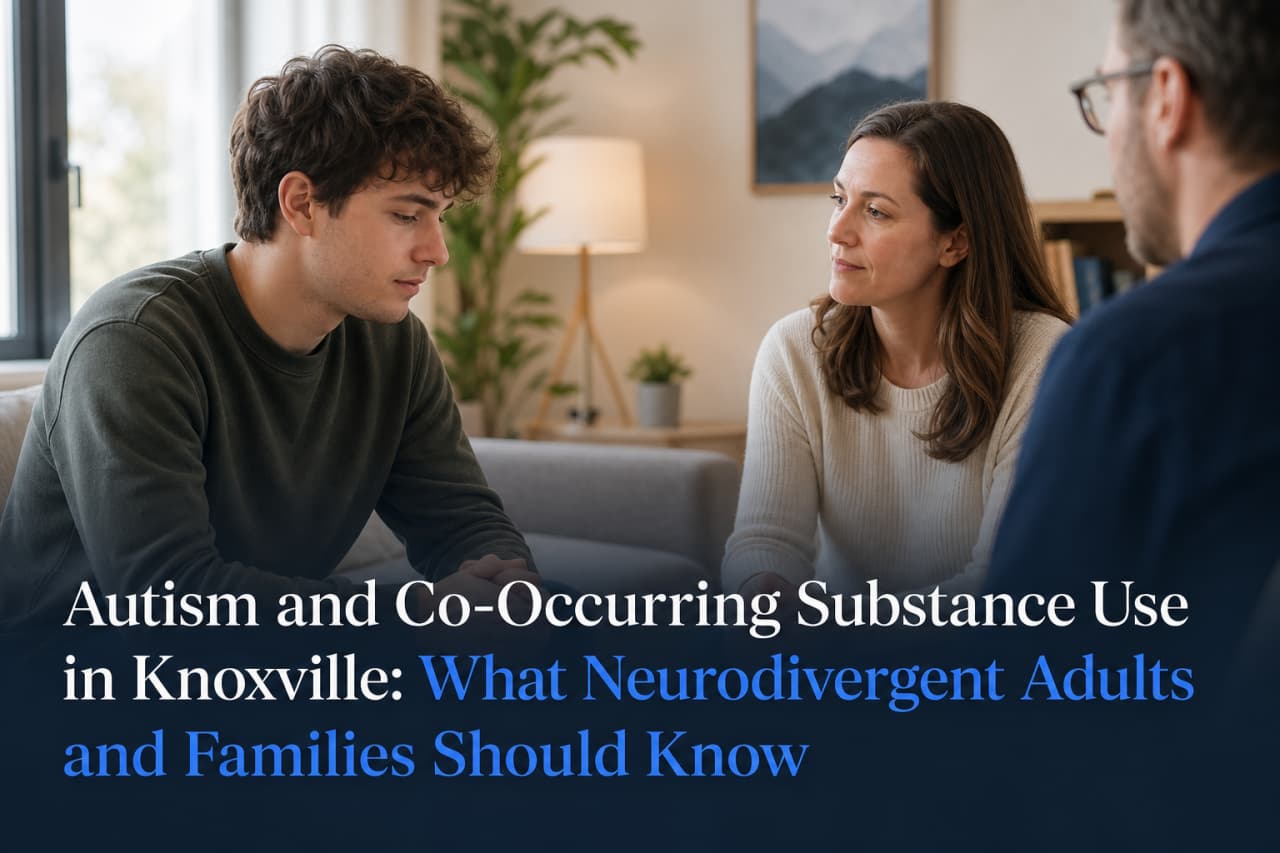
Autism and Co-Occurring Substance Use in Knoxville: What Neurodivergent Adults and Families Should Know
Autism and addiction can affect autistic people and their families in ways that differ from the general population. For individuals with ASD, autistic characteristics, autism symptoms, attention deficit hyperactivity disorder, other psychiatric disorders, or developmental disabilities may shape how drug or alcohol use affects daily life. This guide explores autism and substance use treatment, substance abuse, addiction risk, and the treatment approaches available to autistic adults and young adults in Knoxville.
Understanding the Connection Between Autism and Substance Use
Autism can affect communication, sensory processing, social interactions, routines, and emotional regulation, which may influence how a person responds to stress. Some autistic adults may use alcohol or drugs to cope with anxiety, depression, sensory overload, social pressure, trauma, or difficulty managing emotions, which can place them at increased risk; research suggests they are nearly three times more likely to develop addictions.
Over time, repeated substance use can create additional problems with mental health, relationships, work, daily routines, and physical health. An estimated 19%-30% of autistic individuals experience substance use-related problems. Autism and substance use treatment can address these co-occurring needs through structured care, clear communication, behavioral support, and healthier coping strategies.
Why Autistic Adults May Use Alcohol or Drugs to Cope
Autistic adults may use alcohol or drugs to manage stress, social anxiety, sensory overload, loneliness, sleep problems, or difficult emotions, and substance use can become a coping mechanism for stress and social interaction difficulties. Some substances may temporarily reduce discomfort, make social situations feel easier, or seem to improve mental focus, but repeated use can increase the risk of dependence.
Healthy coping skills can help address the underlying reason for substance use without relying on alcohol or drugs, and early support may help before someone starts developing substance use problems.
Sensory Overload, Communication Challenges, and Emotional Regulation
Bright lights, loud sounds, crowded environments, unexpected changes, and other sensory triggers can cause significant stress for some autistic adults, while communication strain can also make social interaction harder. Communication difficulties or problems identifying and expressing emotions may also make it harder to ask for help. Some autistic people may develop addictions when substances are used repeatedly for temporary relief.
Autistic Burnout, Masking, and Substance Use
Autistic burnout can involve severe exhaustion, reduced ability to manage daily tasks, and increased sensitivity after prolonged stress or demands. Masking autistic traits to meet social expectations can also require significant mental and emotional effort. Alcohol or drugs may become a coping method during periods of burnout, making it important for treatment to address stress, recovery needs, and substance use together.
Co-Occurring Anxiety, Depression, ADHD, and Trauma
Autistic adults can also experience anxiety disorders, depression, ADHD, PTSD, and obsessive compulsive disorder, which may overlap with autism-related repetitive patterns. These conditions may increase distress and can contribute to using substances for sleep, emotional relief, stimulation, or temporary escape.
Integrated treatment can address autism, mental health symptoms, and substance use without treating each concern in isolation, while recognizing that intellectual disability can also affect support needs and treatment planning for some autistic adults.
Common Substance Use Disorders Among Autistic Adults
Substance-related problems can involve alcohol, cannabis, nicotine, prescription medications, opioids, stimulants, or sedatives. The type and severity can vary, making individual assessment important.
Alcohol Use Disorder
Alcohol Use Disorder involves difficulty limiting alcohol use despite negative effects on health, work, or relationships.
Cannabis Use Disorder
Cannabis Use Disorder involves frequent cannabis use involving cravings, tolerance, withdrawal, or difficulty cutting back.
Opioid Use Disorder
Opioid Use Disorder involves misuse of prescription or illicit opioids that can lead to dependence and serious overdose risk.
Stimulant Use Disorder
Problematic cocaine, methamphetamine, or other stimulant use that may worsen anxiety and sleep problems.
Sedative Use Disorder
Misuse of benzodiazepines or other depressants that can cause dependence, withdrawal, and overdose.
Prescription Drug Misuse
Taking medications in larger amounts, more often, or differently than prescribed.
Gambling Addiction
A behavioral addiction that can create serious financial and personal harm through persistent, hard-to-control betting behavior.
Signs an Autistic Adult May Have a Substance Use Disorder
- Increasing alcohol or drug use
- Strong cravings or difficulty cutting back
- Needing more of a substance to achieve the same effect
- Experiencing withdrawal symptoms
- Using substances to manage sensory overload or emotions
- Changes in established routines or interests
- Increased anxiety, depression, irritability, or isolation
- Problems at work, school, or home
- Neglecting responsibilities or personal care
- Continuing substance use despite negative consequences
How Autism and Substance Use Disorders Are Assessed and Diagnosed
Assessment may include a review of substance use patterns, mental health symptoms, medications, physical health, daily functioning, sensory needs, and communication preferences within the broader framework of the diagnostic and statistical manual used to diagnose substance use and related mental health conditions.
Pervasive developmental disorder and high functioning autism are older terms that may appear in discussions of autism diagnosis and treatment. Clinicians may also evaluate anxiety, depression, ADHD, trauma, and other co-occurring conditions that could influence substance use. The American Psychiatric Association defines autism spectrum disorder within the broader category of developmental disorders.
An accurate diagnosis helps determine whether outpatient care, IOP, PHP, residential treatment, medication management, or another level of support is appropriate.
Prevalence and Risk Factors for Substance Use Among Autistic Adults
Research suggests that substance use patterns among autistic adults vary based on the population and substance being studied. Recent addiction research suggests autistic individuals are nearly three times more likely to develop addiction. A systematic review also found substance use-related problems in about 19%-30% of autistic individuals.
Risk factors may include co-occurring anxiety, depression, ADHD, trauma, social isolation, chronic stress, masking, sleep problems, and using substances as a coping strategy. Identifying these factors can help treatment providers better understand autism spectrum disorders and develop a care plan that addresses both substance use and mental health needs.
Effects and Risks of Co-Occurring Autism and Substance Use
Short-Term Effects
- Impaired judgment and coordination
- Anxiety or mood changes
- Sleep and sensory problems
- Disrupted routines
- Accidents or overdose
Long-Term Effects
- Substance dependence or addiction
- Worsening mental health symptoms
- Cognitive and physical health problems
- Social isolation
- Work and relationship problems
- Withdrawal and relapse risks
Withdrawal, Overdose, and Medication Safety for Autistic Adults
Physical dependence can cause withdrawal when alcohol, opioids, benzodiazepines, or other substances are reduced or stopped. Withdrawal symptoms can range from anxiety, nausea, and sleep problems to seizures or other serious complications, depending on the substance and severity of dependence.
Medical supervision can help manage withdrawal, while medication reviews can identify dangerous interactions between prescription drugs, alcohol, opioids, and sedatives that may increase overdose risk.
Levels of Care for Autism and Co-Occurring Substance Use
The right level of care depends on substance use severity, withdrawal risk, mental health symptoms, home support, safety, and ability to manage daily responsibilities; people with severe addiction may need more structured care, and some autistic individuals may require more therapy sessions than typical patients.
Treatment may include inpatient rehab, partial hospitalization programs (PHP), intensive outpatient programs (IOP), or standard outpatient services. A clinical assessment can help determine the appropriate starting point and whether a person needs to move between levels of care during recovery.
Barriers Autistic Adults May Face in Addiction Treatment
Autistic adults may experience sensory overload, unclear communication, unpredictable schedules, crowded group settings, or difficulty identifying and describing emotions. Standard addiction treatment models often fail to meet the needs of autistic individuals.
Changes in routine and unfamiliar environments can also create stress that makes treatment participation harder. Autism-informed care can reduce these barriers by considering communication style, sensory needs, routines, and individual learning preferences. Many addiction treatment services also lack autism-specific training for therapists, which can make treating patients with co-occurring autism and substance use more difficult.
Benefits of Autism-Informed Substance Use Treatment
- Clear Communication: Direct language and clear expectations can reduce confusion, and peer support can help when group sessions are adapted for autistic individuals.
- Sensory Support: Adjustments may reduce problems caused by noise, lighting, crowds, or other triggers.
- Predictable Structure: Consistent routines can make treatment easier to follow and can make support from other recovering addicts more useful when expectations are explicit.
- Individualized Coping Skills: Treatment can identify alternatives to using substances for stress or sensory regulation.
- Integrated Mental Health Care: Co-occurring psychiatric symptoms can be addressed alongside substance use.
- Relapse Prevention: Plans can account for autism-specific triggers, routines, and support needs.
Treating Mental Health and Substance Use Disorders Together
Autistic adults with substance use disorders may also experience generalized anxiety, social anxiety, depression, ADHD, PTSD, panic symptoms, or sleep disorders. Treating these conditions alongside addiction can help address triggers such as anxiety, trauma symptoms, impulsivity, low mood, insomnia, and emotional distress that may contribute to continued substance use.
How Treatment Programs Adapt to Sensory and Communication Needs
Treatment programs can use direct communication, predictable schedules, written instructions, quieter spaces, and additional time to process information. Providers can also adapt peer support with recovering addicts so it remains helpful by reducing social demands, keeping expectations concrete, and adjusting therapy or group settings when appropriate.
Therapy, Medication Management, and Healthy Coping Skills
An addiction specialist can help tailor therapy for autistic adults to their specific substance use triggers, emotional needs, and stress responses rather than relying on standard approaches alone. Medication management may address certain co-occurring mental health conditions or substance use disorders, while coping skills can include structured routines, sensory regulation, exercise, sleep habits, and supportive activities.
Family Support, Daily Routines, and Relapse Prevention
Family members can support recovery by learning about triggers, maintaining clear communication, and encouraging consistent routines without removing the adult's independence. Family support can be especially important for autistic teens as they move into treatment or recovery planning.
Relapse prevention plans can identify high-risk situations, sensory triggers, early warning signs, coping strategies, and people to contact when additional support is needed.
When to Seek Help
Professional help may be needed when alcohol or drug use becomes difficult to control, causes withdrawal, worsens mental health symptoms, or interferes with work, relationships, health, or daily routines. Overdose, severe withdrawal, suicidal thoughts, or immediate safety concerns require emergency medical attention.
Autism and Substance Use Treatment Options
Residential Treatment
Provides structured addiction and mental health support.
Partial Hospitalization Program (PHP)
Partial Hospitalization Program (PHP) provides intensive daytime treatment while patients live outside the facility.
Intensive Outpatient Program (IOP)
Intensive Outpatient Program (IOP) provides structured therapy while supporting daily independence.
Outpatient Treatment
Offers scheduled therapy and clinical support.
Individual Therapy
Addresses substance use triggers, mental health, and coping skills.
Medication Management
Manages medications for addiction or co-occurring mental health conditions.
Family Support
Helps families understand recovery, boundaries, and relapse warning signs.
Does Insurance Cover Treatment?
Many insurance plans may cover substance use and mental health treatment when services meet medical necessity requirements. Coverage for residential treatment, PHP, IOP, outpatient therapy, and medication management varies by plan, provider network, authorization requirements, and level of care. Patients and families can verify benefits with their insurance provider before beginning treatment.
Conclusion
Autism spectrum disorder (ASD) and substance addiction remain active concerns in the autism community, which continues to discuss autism and addiction, including the higher addiction risk among autistic people, alongside mental disorders, psychiatric comorbidity, self medication, behavioral addictions, alcohol abuse, drug abuse, or illegal drugs.
Effective intervention strategies may include cognitive behavioural therapy, cognitive behaviour therapy, group therapy, family therapy, healthy coping mechanisms, medication support, and individualized treatment plans based on an autism diagnosis, dual diagnosis, and level of need.
Treatment may also address sensory needs, communication differences, daily routines, and other factors that can affect autistic individuals during recovery. With appropriate support, treating addiction and co-occurring psychiatric disorders together can help an autistic person build healthier coping skills and greater stability in daily life.
Seeking Treatment? We Can Help!
At New Hope Healthcare, as an in-network provider we work with most insurance plans, such as:
If you or a loved one are struggling with mental health challenges or substance abuse, seeking treatment and emotional support is crucial.
Consulting a doctor can provide the necessary support and guidance for your teen. Reach out to New Hope Healthcare today. Our team of compassionate professionals is here to support your journey towards lasting well-being.
Effective medication management is a crucial part of the treatment process to ensure safety and success.
Give us a call at 866-799-0806.
FAQs
Can Autistic Adults Develop Substance Use Disorders?
Yes. Autistic adults can develop problems with alcohol, drugs, or prescription medications, especially when substances are used to cope with stress, anxiety, sensory overload, or other mental health symptoms.
How Is Substance Use Treatment Adapted for Autistic Adults?
Treatment may use clear communication, predictable routines, sensory accommodations, individualized therapy, and support for co-occurring mental health conditions.
Can Autism and Substance Use Disorders Be Treated Together?
Yes. Coordinated treatment can address substance use while supporting autism-related sensory, communication, behavioral, and mental health needs.
People Also Ask
Is Substance Use Common in Autistic Adults?
Substance use varies among autistic adults, but some face increased risks related to anxiety, depression, ADHD, trauma, social stress, and coping difficulties.
What Are Signs of Substance Misuse in an Autistic Adult?
Signs may include increased alcohol or drug use, changes in routines, withdrawal from activities, mood changes, declining daily functioning, and difficulty controlling substance use.
What Treatment Options Are Available for Autism and Substance Use?
Options may include residential treatment, PHP, IOP, outpatient therapy, medication management, family support, and relapse prevention based on individual needs.
Sources