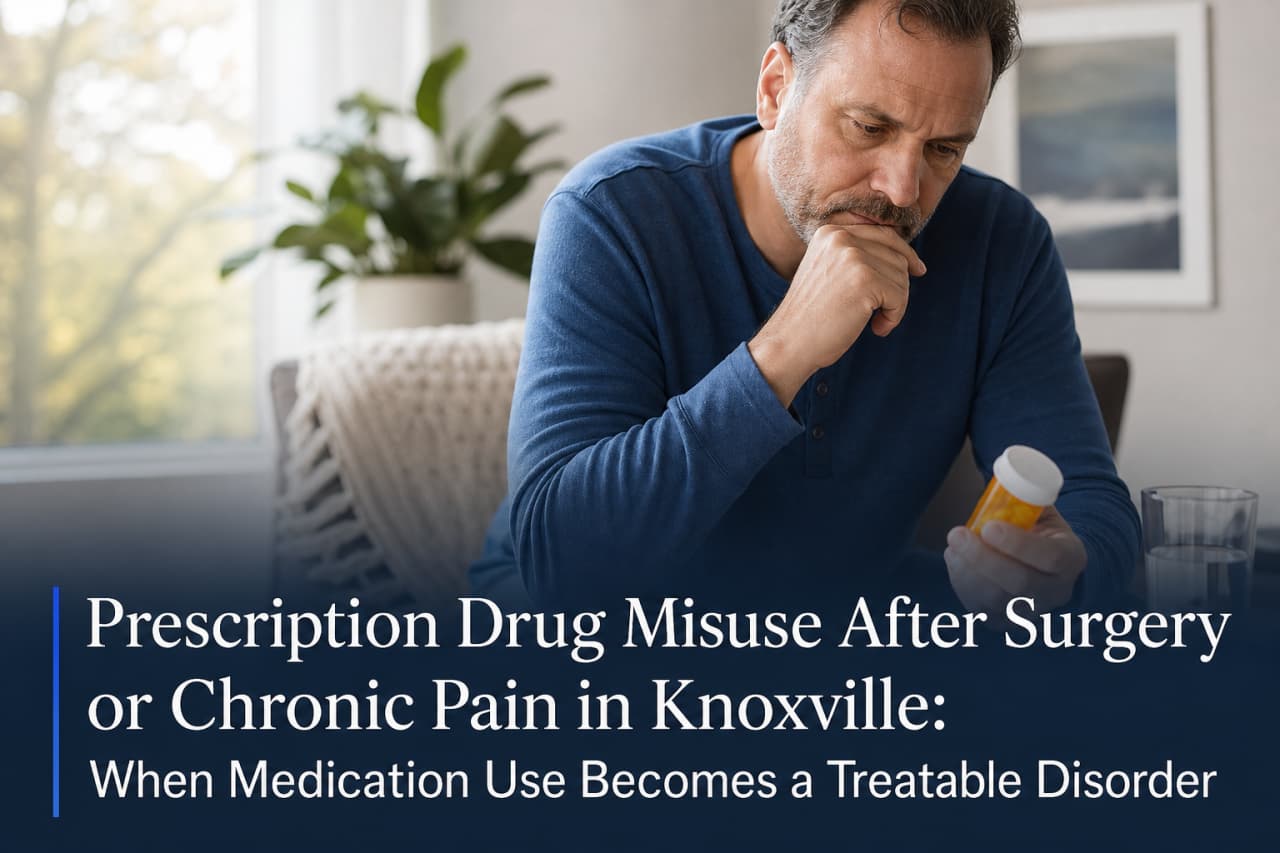
Prescription Drug Misuse After Surgery or Chronic Pain in Knoxville: When Medication Use Becomes a Treatable Disorder
Prescription medicines can play an important role after surgery, during chronic pain, or when doctors treat ADHD and other conditions. However, taking prescription drugs can sometimes shift into substance misuse, prescription drug abuse, or what is called prescription drug misuse, with social isolation increasing risk among older adults and some estimates suggesting 11% of women age 65 and older may misuse prescription drugs. This guide explores prescription drug addiction, key risk factors, and when prescription drug misuse treatment in Knoxville may become an important next step.
What Is Prescription Drug Misuse and When Does It Become a Substance Use Disorder?
Prescription drug misuse occurs when a person takes medication in a way that differs from medical instructions, such as taking higher doses, using it more often, or taking someone else’s prescription. Misuse can involve prescription opioids, benzodiazepines, stimulants, and other medications. Prescription drug misuse may become a substance use disorder when a person has trouble controlling their use despite health, work, relationship, or daily life problems. Signs can include cravings, continued use despite harm, unsuccessful attempts to cut back, and spending significant time obtaining, using, or recovering from the medication.
How Prescription Drug Misuse Develops After Surgery or Chronic Pain
Prescription drug misuse can begin when opioids, sedatives, or other medications are prescribed after surgery or for chronic pain. Some people may start taking larger doses, using medication more often, or continuing it longer than prescribed as tolerance develops or pain continues.
Physical dependence can occur even when a medication was first used as directed. Misuse becomes more concerning when a person loses control over medication use, experiences cravings, or continues using despite harmful effects.
Commonly Misused Prescription Drugs and Their Addiction Risks
Prescription opioids such as oxycodone, hydrocodone, and morphine can cause dependence and opioid use disorder. Benzodiazepines such as alprazolam and diazepam can also cause dependence and dangerous withdrawal, while prescription stimulants such as amphetamine and methylphenidate may be misused for energy, focus, or their stimulating effects.
Each drug carries different risks, but misuse can increase the chance of dependence, substance use disorders, overdose, and other health problems. Risk can increase when medications are taken in larger amounts or combined with other substances. CNS depressants include sedatives and tranquilizers used for anxiety, while stimulants are prescribed for ADHD and narcolepsy.
Signs and Symptoms of Prescription Drug Misuse
- Taking Higher Doses Than Prescribed
- Using Medication More Often or Longer Than Directed
- Strong Cravings or Difficulty Cutting Back
- Running Out of Prescriptions Early
- Seeking Medication From Multiple Providers
- Developing Tolerance or Withdrawal Symptoms
- Continuing Use Despite Negative Consequences
How Prescription Drug Misuse Is Diagnosed and Assessed
Assessment may review prescription use, dosage patterns, withdrawal symptoms, cravings, mental health, chronic pain, and other substance use to identify a substance use disorder (SUD). The Substance Abuse and Mental Health Services Administration tracks behavioral health statistics on mental disorders, while the National Institute on Drug Abuse Prescription Drugs Research Report links abusing prescription drugs with serious risks, including overdose deaths.
Research shows medications used to treat anxiety or attention deficit hyperactivity disorder can carry misuse and withdrawal risks, while the American Psychiatric Association’s Diagnostic and Statistical Manual provides criteria for diagnosing substance use disorders.
Prescription Drug Misuse and Mixing Medications With Alcohol or Other Drugs
Mixing prescription medications with alcohol or other drugs can increase serious health risks. Combining opioids or benzodiazepines with alcohol or other central nervous system depressants can cause extreme sedation, slowed breathing, loss of consciousness, overdose, and death.
Using several substances can also make withdrawal and treatment more difficult. Patients should tell healthcare providers about prescription medications, over-the-counter drugs, alcohol, and other substances they use so risks can be assessed.
Prevalence of Prescription Drug Misuse After Surgery
Prescription opioids are commonly used for acute pain after surgery, and some previously opioid-naive patients continue using them months later. Risk can increase with longer use, higher doses, chronic pain, mental health conditions, and previous substance use.
Prescription drug misuse is highest among young people ages 12 to 25, with 5.9% of adults ages 18–25 reporting misuse in 2020 and recreational motives peaking in young adulthood. More than 80% of adolescents and 63.4% of adults who misuse prescription opioids report pain relief as a motive, while 56.3% of adults who misuse stimulants report increased alertness.
No FDA-approved medications specifically treat stimulant or sedative addictions, while opioid use disorder medications include buprenorphine, methadone, and naltrexone. Contingency Management uses rewards to reinforce positive behaviors and encourage abstinence.
Effects and Risks of Prescription Drug Misuse After Surgery
Short-Term Effects
- Drowsiness and Poor Coordination
- Confusion and Mood Changes
- Nausea and Constipation
- Slowed Breathing
- Accidents and Overdose
Long-Term Effects
- Tolerance and Physical Dependence
- Prescription Drug Use Disorder
- Withdrawal and Cravings
- Mental Health Problems
- Relationship and Work Problems
- Increased Overdose Risk
Dependence, Tolerance, Withdrawal, and Overdose Risks
Physical dependence occurs when the body adapts to regular prescription drug use, while tolerance means a person may need a higher dose to experience the same effects. Withdrawal can develop when opioids, benzodiazepines, or other medications are reduced or stopped, while taking high doses or mixing sedating drugs can increase the risk of respiratory depression, loss of consciousness, and overdose.
Dependence does not always mean a person has an addiction, especially when medication has been taken as prescribed. A substance use disorder becomes more likely when a person loses control over use, experiences strong cravings, or continues taking medication despite harmful consequences.
Safe Prescription Drug Withdrawal and the Importance of Medical Supervision
Stopping certain prescription medications suddenly can cause uncomfortable or potentially serious withdrawal symptoms. Opioid withdrawal may cause nausea, sweating, muscle aches, diarrhea, and anxiety, while benzodiazepine withdrawal can cause severe anxiety, confusion, seizures, and other serious complications.
Medical supervision can help patients reduce medications at an appropriate pace, manage withdrawal symptoms, and monitor physical and mental health. Some patients may need detox or a higher level of care before beginning ongoing addiction treatment.
Chronic Pain and Prescription Drug Misuse
People living with chronic pain may use prescription medications for months or years, increasing their exposure to drugs that can cause tolerance and physical dependence. Misuse can develop when a person takes larger doses, uses medication more frequently, or relies on medication for reasons beyond pain relief.
Treatment should address both chronic pain and problematic medication use. Coordinated care can help patients develop safer pain management strategies while addressing cravings, substance use behaviors, and other recovery needs.
Co-Occurring Anxiety, Depression, and Other Substance Use Disorders
Prescription drug misuse can occur alongside generalized anxiety disorder, panic disorder, depression, major depressive disorder, PTSD, ADHD, and sleep disorders such as insomnia. Mental health symptoms may contribute to misuse when a person begins using prescription drugs to manage anxiety, low mood, trauma symptoms, sleep problems, or emotional distress.
Alcohol use disorder, opioid use disorder, cannabis use disorder, and misuse of benzodiazepines or prescription stimulants can also occur together. Identifying each condition during assessment helps providers develop a treatment plan that addresses substance use and mental health at the same time.
Relapse Prevention and Safer Medication Use in Recovery
Relapse prevention helps patients identify triggers, manage cravings, recognize warning signs, and develop coping skills for high-risk situations. Safer medication practices can include following prescribed doses, using one pharmacy, discussing addiction history with healthcare providers, and avoiding alcohol or unsafe drug combinations.
Benefits of Outpatient and IOP Treatment for Prescription Drug Misuse
- Structured Addiction Treatment
- Regular Therapy and Counseling
- Relapse Prevention Support
- Medication Management
- Co-Occurring Mental Health Care
- Ability to Live at Home
- Greater Flexibility for Work and Family
Therapy, Medication Management, and Coordinated Pain Care
Treatment may combine individual or group therapy with medication management and care for chronic pain. Cognitive behavioral therapy (CBT) and relapse prevention can help patients identify triggers, manage cravings, change behaviors linked to misuse, and develop healthier coping skills.
Medication management and coordinated pain care can also address current prescriptions, withdrawal risks, and safer ways to manage ongoing pain without returning to harmful medication use.
Family Support and Recovery From Prescription Drug Misuse
Family members can support recovery by learning about addiction, encouraging treatment, and avoiding behaviors that enable continued misuse. Family therapy can also improve communication, establish boundaries, and help rebuild trust.
When to Seek Help
A person should seek help when prescription medication use becomes difficult to control or begins affecting health, relationships, work, or daily responsibilities. Peer support groups such as Narcotics Anonymous can provide community and accountability during recovery.
Cravings, withdrawal, increasing doses, repeated early refills, unsafe drug combinations, or overdose are important warning signs, and anyone experiencing them should seek treatment from a healthcare provider.
Prescription Drug Misuse Treatment Options
Medical Assessment
Identifies medications being used, dependence, withdrawal risks, mental health symptoms, and treatment needs.
Withdrawal Management
Provides medical support when reducing or stopping certain prescription drugs.
Outpatient Treatment
Offers therapy and recovery support while patients continue living at home.
Intensive Outpatient Program (IOP)
Intensive Outpatient Program (IOP) provides more structured treatment several days per week without residential care.
Behavioral Therapy
Addresses triggers, cravings, coping skills, and behaviors linked to prescription drug misuse.
Medication Treatment
Certain medications may help treat opioid use disorder and other symptoms when clinically appropriate.
Dual Diagnosis Treatment
Dual Diagnosis Treatment addresses substance use and co-occurring mental health disorders together.
Residential Treatment
Provides 24-hour structure and support for people who need a higher level of care.
Does Insurance Cover Treatment?
Many health insurance plans cover substance use disorder treatment, but benefits vary by plan, provider, and level of care. Coverage may include assessments, outpatient treatment, IOP, therapy, medication management, detox, or residential treatment when medically necessary.
Conclusion
Prescription drug addiction can involve opioid pain medications, prescription painkillers, CNS depressants, and other medications that affect brain chemistry. Effective treatment may combine addiction medicine, medication assisted treatment, outpatient counseling, group counseling, support groups, mental health services, and healthy coping mechanisms, especially when an underlying mental health condition or opioid dependence is present.
Treatment services can address drug abuse, substance abuse, withdrawal symptoms, and opioid overdose risks while supporting long-term recovery.
Seeking Treatment? We Can Help!
At New Hope Healthcare, as an in-network provider we work with most insurance plans, such as:
If you or a loved one are struggling with mental health challenges or substance abuse, seeking treatment and emotional support is crucial.
Consulting a doctor can provide the necessary support and guidance for your teen. Reach out to New Hope Healthcare today. Our team of compassionate professionals is here to support your journey towards lasting well-being.
Effective medication management is a crucial part of the treatment process to ensure safety and success.
Give us a call at 866-799-0806.
FAQs
What Is Prescription Drug Misuse Treatment?
Prescription drug misuse treatment addresses dependence, addiction, withdrawal risks, and behaviors linked to the misuse of prescription medications.
Can Prescription Drug Misuse Develop After Surgery?
Yes. Misuse can develop when medications used after surgery are taken differently, longer, or in higher doses than prescribed.
Can Chronic Pain Lead to Prescription Drug Misuse?
Chronic pain can increase exposure to certain medications and may raise the risk of dependence or misuse in some people.
People Also Ask
What Are Signs of Prescription Drug Misuse?
Signs may include taking larger doses, running out early, seeking multiple prescriptions, cravings, withdrawal symptoms, and difficulty controlling use.
How Is Prescription Drug Misuse Treated?
Treatment may include assessment, therapy, medication management, withdrawal support, and care for co-occurring mental health or substance use disorders.
Can IOP Help With Prescription Drug Misuse?
Yes. IOP can provide structured therapy, relapse prevention, medication support, and ongoing care while allowing many patients to live at home.
Sources