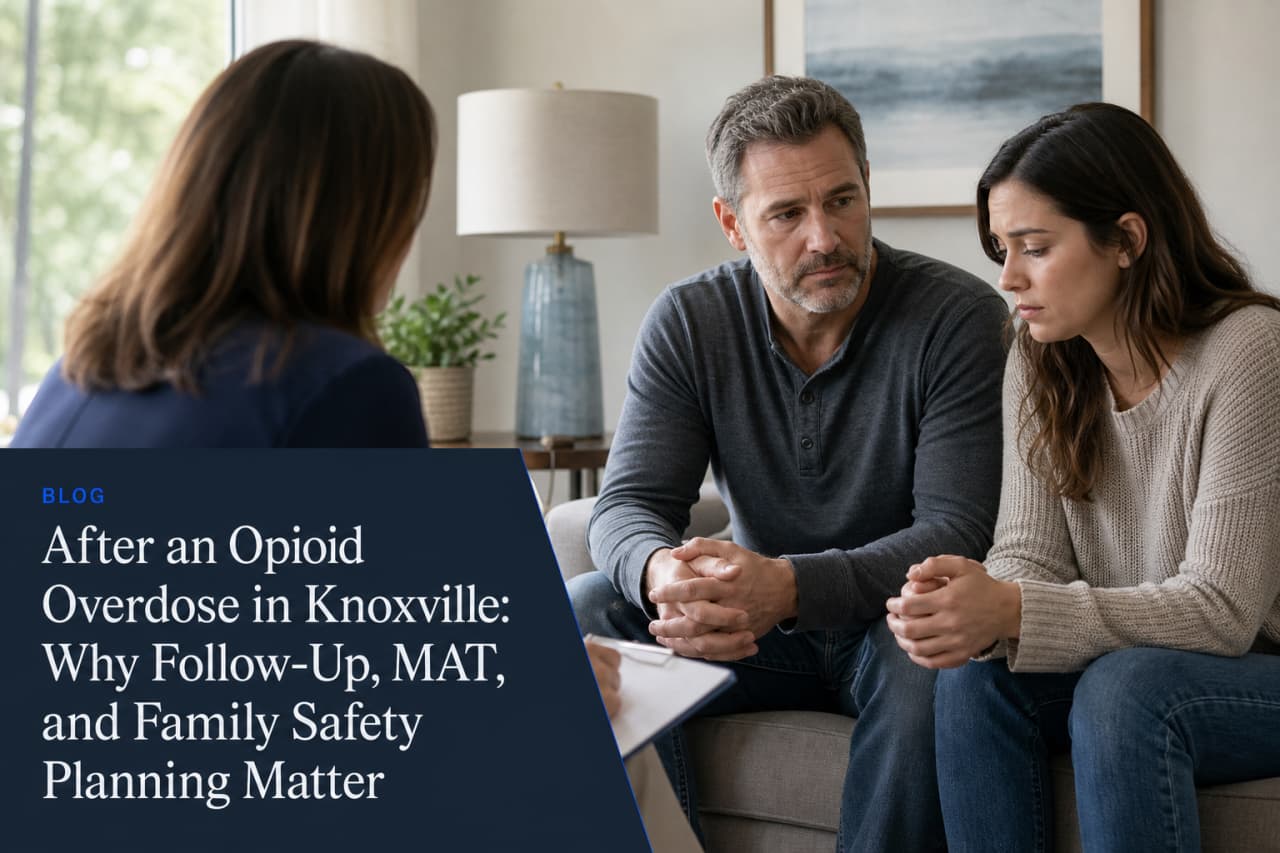
After an Opioid Overdose in Knoxville: Why Follow-Up, MAT, and Family Safety Planning Matter
A suspected opioid overdose can turn into a medical emergency within minutes, especially with fentanyl, fentanyl analogues, and other synthetic opioids. Opioid toxicity can cause opioid-induced respiratory depression because opioids affect brain systems that control breathing, while severe cases can lead to cardiac arrest or death. As the opioid crisis continues to drive drug overdose deaths, Knoxville families may have questions about opioid overdose signs, emergency care, naloxone administration, and what happens after overdose reversal.
Opioid Overdose Signs and What Happens After an Opioid Overdose?
An opioid overdose occurs when opioids slow breathing to a dangerous level, which can reduce oxygen reaching the brain and other vital organs. Signs may include slow or stopped breathing, loss of consciousness, pinpoint pupils, choking or gurgling sounds, and blue or gray lips or skin. Naloxone can rapidly reverse an opioid overdose, but emergency medical care is still necessary because its effects may wear off while opioids remain in the body.
After the immediate crisis, medical providers can evaluate the person for complications and signs of opioid use disorder. Follow-up addiction treatment can address continued opioid use, overdose risk, withdrawal, mental health concerns, and steps that may reduce the risk of another overdose.
Fentanyl, Reduced Tolerance, and Other Risks for a Repeat Overdose
A previous opioid overdose increases the risk of another overdose. Illegally made fentanyl raises this risk because it is highly potent and may be present in counterfeit pills or other drugs without a person knowing. Reduced tolerance after detox, incarceration, hospitalization, or a period without opioids can also make a previously used dose dangerous.
Mixing opioids with alcohol, benzodiazepines, or other sedating substances can further increase overdose risk. High opioid doses, continued substance use, and returning to opioid use after losing tolerance are also major risk factors. Fentanyl is 50–100 times more potent than morphine, while overdose risk is also higher with older age, male sex, and low socioeconomic status; after reversal, patients may be monitored for several hours and provided naloxone kits before discharge.
Why Treatment After Opioid Overdose Matters
Surviving an opioid overdose does not remove the underlying risks associated with opioid use disorder. Without continued care, a person may return to opioid use and remain vulnerable to another overdose, especially if tolerance has decreased or fentanyl is present. An overdose can serve as an important point for connecting a person with addiction treatment.
Treatment can address opioid cravings, withdrawal, continued drug use, mental health symptoms, and behaviors that increase overdose risk. Care may include medication-assisted treatment, counseling, naloxone access, family education, and relapse prevention. Continued treatment can help patients build stability while reducing the risks associated with ongoing opioid use.
Starting Medication-Assisted Treatment After an Opioid Overdose
A medical provider can evaluate a person for medication-assisted treatment, also called medications for opioid use disorder, after an overdose. The appropriate medication and timing depend on the opioid used, withdrawal symptoms, medical history, and previous treatment. Buprenorphine, methadone, and naltrexone are FDA-approved medications for opioid use disorder.
Medication-Assisted Treatment With Buprenorphine, Methadone, or Naltrexone
Buprenorphine can reduce opioid withdrawal and cravings, while methadone is a long-acting medication used to treat opioid use disorder. Naltrexone blocks opioid receptors and requires an opioid-free period before starting treatment. These medications may be combined with counseling and other addiction recovery services.
Benefits of MAT and Continued Opioid Addiction Treatment
- Reduces opioid cravings
- Helps manage withdrawal symptoms
- Reduces uncontrolled opioid use
- Lowers overdose and mortality risk
- Supports treatment participation
- Supports long-term recovery
- Can be combined with counseling and behavioral health care
Naloxone, Opioid Overdose Reversal Medications, and Family Overdose Safety Planning
Naloxone can reverse an overdose involving fentanyl, heroin, or prescription opioids by blocking opioid effects and restoring breathing, and it is available over the counter in several countries. Families should know how to recognize an overdose, where naloxone is stored, how to administer common community formulations such as intranasal naloxone, and when to call 911. A safety plan can also address reduced tolerance, high-risk drug combinations, medication storage, and emergency steps.
Counseling and Behavioral Therapy After an Opioid Overdose
Counseling and behavioral therapy can address cravings, substance use triggers, coping skills, mental health symptoms, and behaviors connected to opioid use. Therapy can also help patients develop relapse prevention strategies and strengthen their recovery support system. These services may be used alongside medications for opioid use disorder.
Why Rapid Follow-Up After an Opioid Overdose Matters
The period after a nonfatal overdose provides an important opportunity to connect a person with addiction treatment. Rapid follow-up can include an opioid use disorder assessment, MAT evaluation, naloxone, counseling, and continued monitoring. Starting and staying engaged in evidence-based treatment can reduce the risk of another overdose and support recovery.
Opioid Overdose Prevalence in Tennessee and the United States
Opioid overdose remains a major public health concern in Tennessee and across the United States. In the United States, opioid overdose deaths exceeded 74,000 in 2021. Fentanyl is involved in many opioid overdose deaths because of its high potency and presence in the illicit drug supply, underscoring the national burden of the opioid epidemic. Tennessee has reported recent declines in fentanyl-related overdose deaths, but fatal and nonfatal opioid overdoses remain an ongoing concern.
Research from the National Institute, Mental Health Services Administration, and Centers for Disease Control and Prevention helps guide responses to drug abuse and overdose among people taking opioids. Studies, including randomized trials and Morbidity and Mortality Weekly Report data, examine rapid-onset drug naloxone, IV administration, and overdose outcomes, while the World Drug Report tracks broader opioid trends.
Effects and Risks of a Nonfatal Opioid Overdose
Short-Term Effects
- Slow or stopped breathing
- Loss of consciousness
- Reduced oxygen to the brain and organs
- Choking or vomiting
- Injury while unconscious
- Acute withdrawal after naloxone
- Emergency medical complications
Long-Term Effects
- Increased risk of another overdose
- Brain injury from prolonged oxygen loss
- Opioid dependence or opioid use disorder
- Physical and mental health complications
- Reduced opioid tolerance
- Increased risk of fatal overdose
- Need for continued addiction treatment and recovery support
Co-Occurring Depression, Anxiety, PTSD, and Suicide Risk
Opioid use disorder can occur with mental health conditions such as major depressive disorder, generalized anxiety disorder, panic disorder, post-traumatic stress disorder (PTSD), bipolar disorder, and other mood or anxiety disorders. Symptoms may include persistent sadness, hopelessness, panic attacks, excessive worry, sleep problems, traumatic memories, mood changes, or difficulty functioning. These conditions can affect substance use, treatment participation, and the risk of returning to opioids.
Suicidal thoughts or behaviors are also an important concern, especially when opioid addiction occurs with depression, trauma, severe emotional distress, or previous suicide attempts. Mental health screening after an overdose can identify conditions that may require psychiatric care, therapy, medication management, or a higher level of treatment.
Alcohol, Benzodiazepines, and Other Co-Occurring Substance Use
People with opioid use disorder may also use alcohol, cannabis, cocaine, methamphetamine, nicotine, or prescription medications. Benzodiazepines such as alprazolam (Xanax), diazepam (Valium), and clonazepam (Klonopin) are especially concerning when combined with opioids because both can suppress the central nervous system. Alcohol can create a similar risk when used with fentanyl, heroin, oxycodone, hydrocodone, or other opioids.
Cocaine and methamphetamine can also appear in polysubstance use patterns, and illicit stimulants may be contaminated with fentanyl. Treatment should assess all substances being used rather than focusing only on opioids.
Relapse and Overdose Prevention During Long-Term Recovery
Relapse prevention focuses on identifying cravings, stress, people, places, and situations connected to opioid use. Long-term recovery may include medication, counseling, peer support, family involvement, and regular follow-up care. Keeping naloxone available and understanding the overdose risk caused by reduced tolerance are also important.
Barriers to Treatment After an Opioid Overdose
Common barriers include withdrawal, cravings, stigma, transportation problems, treatment costs, lack of insurance, unstable housing, and limited access to care. Depression, anxiety, trauma, and fear of withdrawal can also delay treatment. Rapid referrals, medication access, and flexible treatment options can help reduce these barriers.
How Opioid Overdose Is Treated in the Emergency Department
Emergency treatment focuses on restoring breathing with basic life support, airway support, and naloxone. Emergency teams may use nasal, IM, SC, or IV naloxone, with multiple doses or an IV naloxone infusion when needed. Naloxone hydrochloride is the standard opioid antagonist for rapid overdose reversal, while nalmefene has a longer half-life; higher-dose naloxone products were FDA-approved in 2021, and wearable naloxone devices and the CSX-1004 monoclonal antibody are being studied.
Immediate medical care remains important because pulmonary edema, abdominal pain, or recurrent respiratory depression may require hospital treatment. Emergency services and first responders may administer naloxone using a nasal spray, IM naloxone, or SC naloxone, with different naloxone doses and higher-dose formulations available for overdose reversal in clinical and hospital settings. Generic naloxone supports rapid naloxone reversal and may be administered by emergency medical services or in a clinical setting, including for patients receiving opioids in palliative care.
Residential, IOP, and Outpatient Treatment After an Opioid Overdose
The appropriate level of care depends on opioid use severity, overdose history, withdrawal risk, mental health symptoms, and safety needs. Residential treatment provides structured living support, while PHP and IOP provide intensive treatment without overnight care. Outpatient treatment provides scheduled addiction services with greater independence.
Family Support During Opioid Addiction Recovery
Families can support recovery by learning about opioid use disorder, keeping naloxone available, recognizing overdose signs, and encouraging continued treatment. Family therapy or education can also improve communication, establish healthy boundaries, and help relatives recognize relapse or overdose warning signs.
When to Seek Help
Professional treatment should be considered after any opioid overdose, especially when opioid use continues or the person cannot stop without help. Call 911 for a suspected overdose, loss of consciousness, severe breathing problems, or another medical emergency. Immediate crisis help is also important for suicidal thoughts, suicide attempts, or threats of serious harm.
Opioid Addiction Treatment Options
Medical Detox
Provides medical support for opioid withdrawal and related health concerns.
Residential Treatment
Provides structured living with addiction and mental health care.
Partial Hospitalization Program (PHP)
Partial Hospitalization Program (PHP) provides intensive daytime treatment without overnight care.
Intensive Outpatient Program (IOP)
Provides frequent structured treatment with greater independence.
Outpatient Treatment
Outpatient Treatment provides scheduled counseling, medication management, and recovery support.
Medication-Assisted Treatment (MAT)
Uses buprenorphine, methadone, or naltrexone to treat opioid use disorder.
Dual-Diagnosis Treatment
Dual-Diagnosis Treatment addresses opioid addiction and conditions such as depression, anxiety, PTSD, or bipolar disorder.
Individual and Group Therapy
Addresses triggers, cravings, coping skills, and relapse prevention.
Family Support
Provides education, safety planning, boundaries, and recovery support.
Does Insurance Cover Treatment?
Health insurance may cover opioid addiction treatment when it is medically necessary and included in the plan. Benefits may include detox, residential treatment, PHP, IOP, outpatient care, therapy, mental health services, and medications. Coverage, copays, deductibles, provider networks, and prior authorization requirements vary by plan.
Conclusion
Treatment after opioid overdose can address more than the immediate effects of drug overdose or opioid toxicity. After receiving naloxone and emergency medical care, continued addiction treatment may address substance abuse, illicit opioids, other substances, mental health needs, and the risk of another fentanyl overdose.
Medication-assisted treatment, counseling, support groups, naloxone access, and family safety planning can support continued recovery and reduce future overdose risk.
Seeking Treatment? We Can Help!
At New Hope Healthcare, as an in-network provider we work with most insurance plans, such as:
If you or a loved one are struggling with mental health challenges or substance abuse, seeking treatment and emotional support is crucial.
Consulting a doctor can provide the necessary support and guidance for your teen. Reach out to New Hope Healthcare today. Our team of compassionate professionals is here to support your journey towards lasting well-being.
Effective medication management is a crucial part of the treatment process to ensure safety and success.
Give us a call at 866-799-0806.
FAQs
What Treatment Is Recommended After an Opioid Overdose?
Treatment may include medical evaluation, medication-assisted treatment (MAT), counseling, naloxone access, and ongoing addiction care.
Can MAT Be Started After an Opioid Overdose?
Yes. A medical provider can evaluate whether medications such as buprenorphine, methadone, or naltrexone are appropriate.
Why Is Naloxone Important After an Opioid Overdose?
Naloxone can rapidly reverse an opioid overdose and should remain available because another overdose can occur.
People Also Ask
What Happens After You Survive an Opioid Overdose?
Medical monitoring and follow-up care can identify complications, opioid use disorder, and the need for continued treatment.
Can You Overdose Again After Being Given Naloxone?
Yes. Naloxone can wear off while opioids remain active, so emergency medical evaluation is still important.
How Soon Should Treatment Begin After an Opioid Overdose?
Follow-up and addiction treatment should begin as quickly as possible after the person is medically stable.
Sources