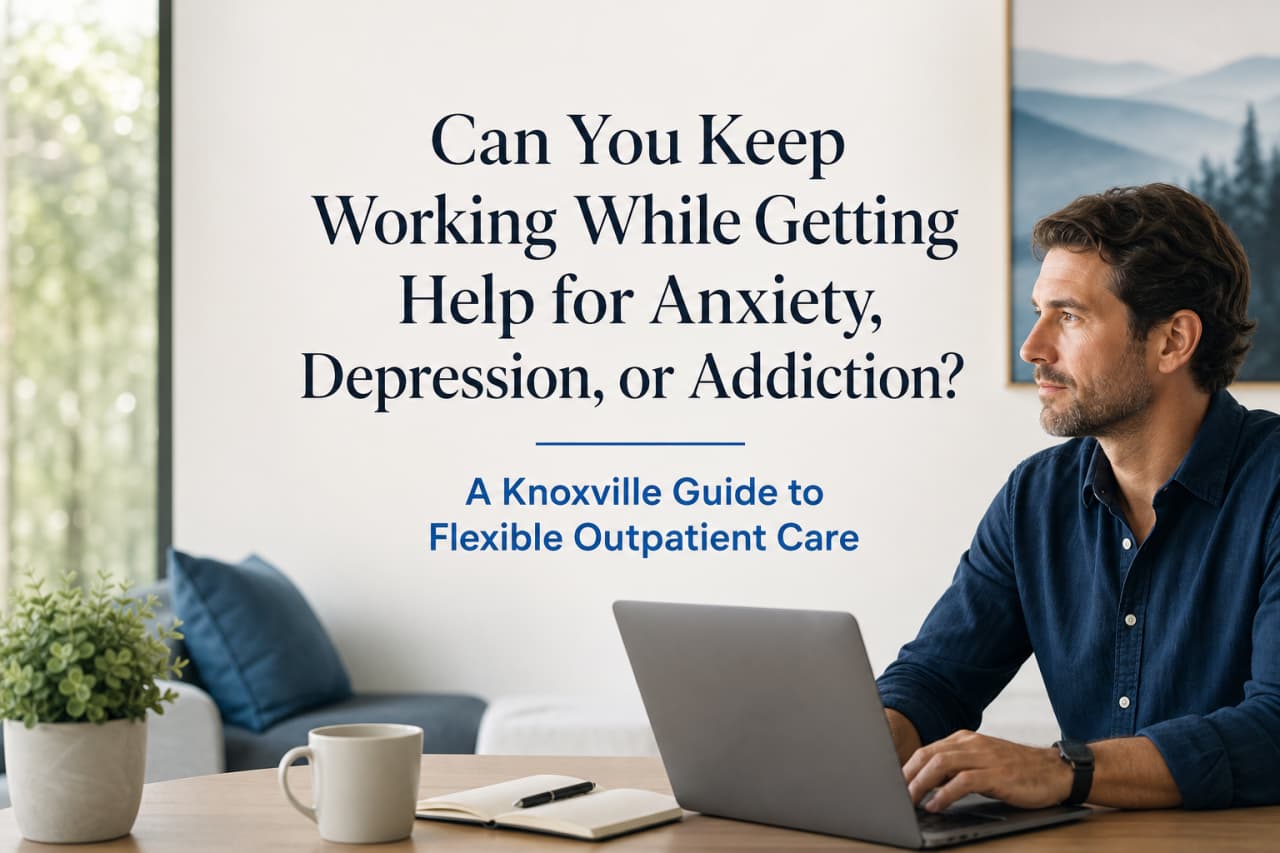
Can You Keep Working While Getting Help for Anxiety, Depression, or Addiction? A Knoxville Guide to Flexible Outpatient Care
Balancing work with anxiety, depression, addiction, or other mental health challenges can make getting help feel difficult to fit into everyday life. For working professionals with demanding schedules, family obligations, and financial stress, the idea of adding treatment to an already full work schedule can raise practical questions. This guide explores outpatient mental health treatment while working and how flexible mental health care may support emotional well being, professional responsibilities, and a recovery journey without immediately stepping away from daily life.
What Is Outpatient Mental Health Treatment While Working?
Outpatient mental health treatment while working allows people to receive care for anxiety, depression, addiction, and other behavioral health concerns without leaving their jobs or staying overnight at a treatment facility. Care may include individual or group therapy, medication management, and structured programs scheduled around work and family responsibilities. The level and frequency of treatment depend on a person’s symptoms and individual needs.
This approach can help people manage symptoms, build coping skills, and address co-occurring mental health and substance use disorders while maintaining daily routines. A clinical assessment can determine whether standard outpatient care, an intensive outpatient program (IOP), or a higher level of care is appropriate.
Signs Anxiety or Depression Is Affecting Work and Daily Life
- Difficulty concentrating or making decisions
- Frequent worry, nervousness, or feeling overwhelmed
- Low motivation or loss of interest in work
- Fatigue or low energy during the workday
- Irritability with coworkers, family, or friends
- Missing work, arriving late, or leaving early
- Trouble meeting deadlines or completing routine tasks
- Changes in sleep or appetite
- Avoiding meetings, social situations, or responsibilities
- Using alcohol or drugs to manage stress or difficult emotions
How Work Stress Can Worsen Anxiety and Depression
Heavy workloads, long hours, job insecurity, and workplace conflict can worsen anxiety, depression, sleep problems, fatigue, and concentration. About 66% of employees report job burnout, while mental health symptoms can reduce performance and create more stress. Workplace culture and the work environment can also affect family members, job performance, and access to treatment sessions, making early stress management important to prevent symptoms from escalating.
Benefits of Getting Mental Health Treatment While Staying Employed
- Maintains income and financial stability
- Allows people to keep a regular daily routine
- Provides professional support without requiring residential care
- Builds coping and stress management skills
- Helps address symptoms that interfere with job performance
- Allows new coping skills to be practiced in everyday situations
- Supports relationships and responsibilities outside work
- Provides treatment for co-occurring mental health and substance use disorders
How Flexible Outpatient Care Fits Around Work and Family Responsibilities
Flexible outpatient care helps people balance treatment with work, family, and other daily responsibilities through in-person or telehealth sessions. Telehealth can reduce commuting time, while an IOP may provide more structure than weekly therapy. Unlike residential treatment programs or inpatient rehab, outpatient care may provide a few hours of treatment while people continue managing mental illness, withdrawal symptoms, work, and other responsibilities.
What to Expect From Therapy and Medication Management
Therapy can help address anxiety, depression, substance use, and unhealthy behavior patterns through approaches such as CBT, DBT, individual counseling, and group therapy. Medication management may include evaluating psychiatric medications and monitoring symptoms, dosage, side effects, and treatment progress.
Common Mental Health Conditions Treated in Outpatient Care
Outpatient programs may treat several mental health conditions based on symptom severity and safety needs. Common conditions include generalized anxiety disorder, social anxiety disorder, panic disorder, major depressive disorder, persistent depressive disorder, post-traumatic stress disorder (PTSD), obsessive-compulsive disorder (OCD), bipolar disorder, and other mood or anxiety disorders.
Outpatient care may also address trauma-related symptoms, chronic stress, grief, anger, sleep problems, and emotional regulation difficulties. People with both a mental health condition and alcohol or drug use disorder may receive dual diagnosis treatment that addresses both conditions together.
How IOP Can Provide More Support While You Continue Working
An intensive outpatient program, or IOP, provides more structure and treatment hours than standard outpatient therapy without requiring an overnight stay. IOP may include several group therapy sessions each week along with individual therapy, medication management, relapse prevention, and mental health education.
Many programs use schedules that allow patients to continue working, attending school, or caring for family. Many professionals choose IOP treatment because it offers structured support while preserving parts of their usual routine. IOP may be appropriate when symptoms require more support than occasional outpatient appointments but do not require 24-hour care.
Eligible employees may also be able to use FMLA for mental health treatment when a healthcare provider recommends it, and that leave is job-protected.
Differences Between Outpatient Care, IOP, and PHP
Outpatient Care
Provides scheduled therapy, psychiatric care, or medication management with fewer weekly treatment hours.
Intensive Outpatient Program (IOP)
Provides several hours of structured treatment on multiple days each week while the patient continues living at home.
Partial Hospitalization Program (PHP)
Provides a higher level of structured daytime treatment, often for several hours per day on most treatment days, without requiring an overnight stay.
The appropriate level of care depends on symptoms, safety risks, substance use, daily functioning, and previous treatment response. A clinical assessment can help determine which option provides enough support.
Prevalence of Anxiety and Depression Among Working Adults
Anxiety and depression are common mental health concerns among working adults. Nearly one in five adults experience a mental health condition each year. Symptoms can affect concentration, energy, attendance, decision-making, relationships, and job performance.
Some people continue working despite significant symptoms, which can make their mental health struggles less visible to others, and many delay or avoid seeking mental health support because of work demands or privacy concerns.
Effects and Risks of Untreated Mental Health Symptoms
Short-Term Effects
- Difficulty concentrating and making decisions
- Sleep and appetite changes
- Fatigue and reduced motivation
- Increased worry, sadness, or irritability
- Lower productivity and work performance
- Conflict in relationships
- Increased alcohol or drug use as a coping method
Long-Term Effects
- Worsening anxiety or depressive symptoms
- Greater problems with work and relationships
- Increased risk of developing or worsening substance use disorders
- Persistent sleep and physical health problems
- Social withdrawal and isolation
- Difficulty maintaining employment or daily responsibilities
- Increased risk of self-harm or suicidal thoughts in some people
How Addiction, Anxiety, and Depression Can Occur Together
Substance use disorders can occur alongside generalized anxiety disorder, panic disorder, social anxiety disorder, major depressive disorder, PTSD, and bipolar disorder. Some people use alcohol or drugs to cope with worry, panic, sadness, trauma symptoms, or mood changes, while repeated substance use can worsen these symptoms.
When mental health and substance use disorders occur together, they are called co-occurring disorders. Treatment can address both conditions at the same time and identify how symptoms, substance use, and daily stress affect each other.
How Alcohol and Drug Use Can Worsen Mental Health Symptoms
Alcohol and drug use can worsen existing mental health symptoms or contribute to new problems. Alcohol may increase depression, anxiety, sleep problems, and impulsive behavior, while cannabis can increase anxiety, panic, paranoia, or low motivation in some people.
Cocaine and methamphetamine can contribute to anxiety, agitation, insomnia, paranoia, and mood changes. Opioid use can contribute to dependence, depression, and mood changes, especially during withdrawal. Benzodiazepine misuse can also lead to dependence, and withdrawal may cause rebound anxiety and other symptoms. These effects can make it harder to manage an existing mental health condition and maintain stability at work or home.
Benefits of Dual Diagnosis Treatment for Co-Occurring Disorders
- Integrated Care: Treats mental health and substance use disorders together.
- Symptom Management: Addresses anxiety, depression, trauma, and other psychiatric symptoms.
- Coping Skills: Builds healthier ways to manage stress and difficult emotions.
- Medication Support: Includes medication management when appropriate.
- Relapse Prevention: Identifies triggers linked to both substance use and mental health.
- Coordinated Treatment: Creates one plan that addresses both conditions.
How to Balance Treatment, Work, and Personal Responsibilities
A consistent schedule and planning ahead can make treatment easier to manage alongside employment and family responsibilities. It helps to treat therapy or psychiatry appointments like professional commitments so they stay protected on the calendar.
Weekly outpatient therapy sessions often last about one hour, which can make attending treatment easier to schedule around work. Patients can schedule appointments around work when possible and set aside time for therapy, recovery activities, sleep, and other health needs.
Flexible outpatient care can reduce disruption to everyday routines. If symptoms begin interfering with work, safety, or daily functioning, a more structured treatment schedule may be needed, especially because treatment days can be emotionally demanding when symptoms are worsening.
Privacy and Confidentiality While Getting Treatment and Staying Employed
Mental health and substance use treatment records generally have privacy protections under HIPAA regulations, and treatment does not automatically give an employer access to clinical information. Workplace accommodations or medical leave may involve separate requirements, and the Americans with Disabilities Act protects employees with qualifying mental health conditions and may support reasonable adjustments.
Patients may also need documentation when requesting FMLA leave or accommodations, so they can discuss privacy concerns with their provider or HR department, including how to arrange telehealth or phone sessions in a private space during the workday.
How to Choose the Right Level of Outpatient Care
The right level of care depends on symptoms, substance use, safety concerns, and daily functioning. Standard outpatient care may fit manageable symptoms, while IOP or PHP provides more frequent and structured support. A clinical assessment can help determine the appropriate level of care.
When to Seek Help
Professional support may be needed when anxiety, depression, substance use, or other mental health symptoms begin affecting work, sleep, relationships, or everyday responsibilities. Other warning signs include worsening symptoms, difficulty controlling substance use, severe mood changes, frequent work absences, or increasing isolation.
Immediate help is important when someone is at risk of suicide, self-harm, overdose, or harming another person.
Outpatient Mental Health and Addiction Treatment Options
Individual Therapy
Addresses symptoms, triggers, and coping skills.
Group Therapy
Provides structured treatment and peer support.
Medication Management
Monitors psychiatric medications and symptoms.
Outpatient Treatment
Provides scheduled care while living at home.
Intensive Outpatient Program (IOP)
Intensive Outpatient Program (IOP) provides more frequent structured treatment.
Partial Hospitalization Program (PHP)
Partial Hospitalization Program (PHP) provides intensive daytime care.
Dual Diagnosis Treatment
Dual Diagnosis Treatment treats mental health and substance use together.
Medication-Assisted Treatment (MAT)
Uses medication and therapy for certain substance use disorders.
Does Insurance Cover Treatment?
Many insurance plans provide benefits for mental health and substance use disorder treatment, but coverage varies by plan. Some employees may also use the Family and Medical Leave Act (Medical Leave Act) for qualifying treatment needs, which can provide up to 12 weeks of unpaid, job protected leave if they are eligible and submit required verification.
Outpatient therapy, medication management, IOP, PHP, and addiction treatment may be covered when eligibility and medical necessity requirements are met. Before starting care, patients can verify in-network providers, deductibles, copays, coinsurance, prior authorization requirements, and covered levels of care with their insurer or treatment provider.
Conclusion
Mental health recovery can look different for every person, and treatment plans should reflect individual symptoms, work responsibilities, family obligations, and recovery needs. Flexible hours, personalized treatment plans, practical strategies, and a supportive environment can help busy professionals develop healthier coping strategies, manage work related stress, and build healthier boundaries that support long term recovery.
Treatment providers understand that balancing work and care can be challenging, and the right treatment team can help determine how much support fits your current needs.
Seeking Treatment? We Can Help!
At New Hope Healthcare, as an in-network provider we work with most insurance plans, such as:
If you or a loved one are struggling with mental health challenges or substance abuse, seeking treatment and emotional support is crucial.
Consulting a doctor can provide the necessary support and guidance for your teen. Reach out to New Hope Healthcare today. Our team of compassionate professionals is here to support your journey towards lasting well-being.
Effective medication management is a crucial part of the treatment process to ensure safety and success.
Give us a call at 866-799-0806.
FAQs
Can You Work While Receiving Outpatient Mental Health Treatment?
Yes. Outpatient treatment can allow people to continue working while attending scheduled therapy, medication management, or other services.
What Mental Health Conditions Can Outpatient Treatment Address?
Outpatient care may address anxiety, depression, PTSD, mood disorders, and co-occurring substance use disorders.
How Often Do You Attend Outpatient Mental Health Treatment?
The schedule depends on symptoms, treatment needs, and the level of care recommended after an assessment.
People Also Ask
Can You Work While Attending an IOP?
Yes. Many IOPs offer schedules that allow patients to continue working while receiving structured treatment.
Is Outpatient Treatment Enough for Anxiety and Depression?
It may be appropriate for people who are stable and can safely manage daily responsibilities outside treatment.
When Is a Higher Level of Mental Health Care Needed?
More intensive care may be recommended when symptoms create serious safety concerns or significantly interfere with daily functioning.
Sources