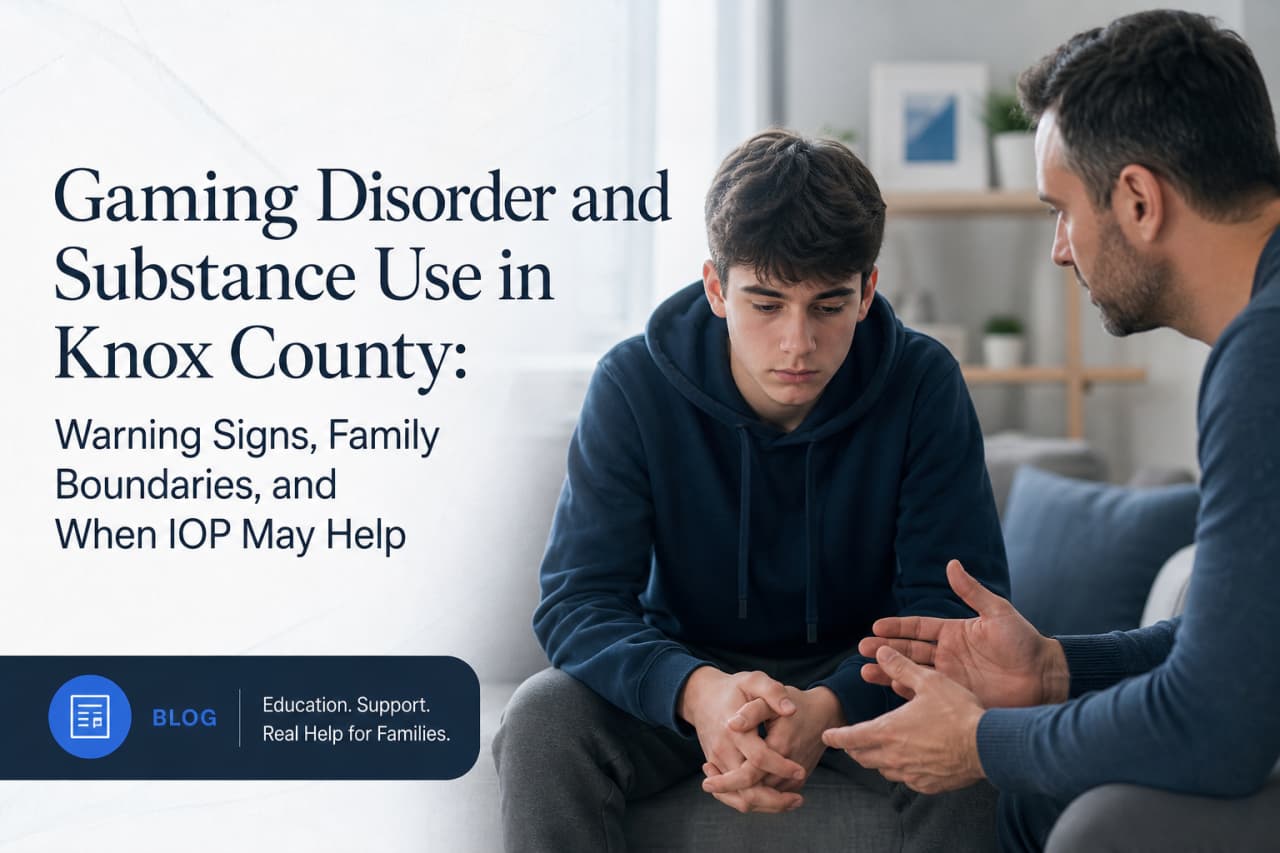
Teen Gaming Disorder and Substance Use in Knox County: Warning Signs, Family Boundaries, and When IOP May Help
Teen gaming disorder and substance use can affect sleep, school, family members, social relationships, physical activity, and mental well being. Teen video game addiction may develop when playing video games or online games becomes a coping mechanism to relieve negative moods, while addictive substances can create additional risks. Understanding the signs of video game addiction, internet gaming disorder, and underlying issues can help families know when support from mental health professionals may be needed.
What Is Teen Gaming Disorder, Video Game Addiction, and Substance Use?
Teen gaming disorder involves gaming that becomes difficult to control and interferes with school, sleep, relationships, or daily responsibilities. Teens may prioritize video games or a virtual world despite negative effects, while also using alcohol, cannabis, nicotine, prescription drugs, or other substances. Gaming disorder and substance use can share risk factors such as stress, impulsivity, isolation, family conflict, and mental health conditions.
The WHO recognized gaming disorder as a mental health condition in 2018, and professional assessment can help identify treatment needs. Many teens play games, and different aspects of gaming can become harmful when they interfere with mental health and daily life.
Common Causes and Risk Factors in Teens
Teen gaming disorder and substance use can develop through a mix of behavioral, social, family, and mental health factors. Risk may increase when gaming or substance use becomes a way to cope with stress, boredom, loneliness, anxiety, depression, trauma, or problems at school.
Other risk factors include impulsivity, ADHD, poor sleep, limited parental supervision, family conflict, peer substance use, easy access to drugs or alcohol, and spending long periods online. A risk factor does not mean a teen will develop a disorder, but multiple risk factors can increase concern.
Warning Signs of Gaming Disorder and Substance Use
- Losing control over gaming time
- Gaming late at night and losing sleep
- Declining grades or missed school
- Losing interest in hobbies or activities
- Irritability when gaming is restricted
- Hiding gaming or substance use
- Using nicotine, cannabis, alcohol, or other drugs
- Changes in mood, sleep, appetite, or personal hygiene
- Withdrawing from friends or family
- Continuing despite negative consequences
How Gaming and Substance Use Can Reinforce Each Other
Gaming and substance use may reinforce each other when a teen begins connecting substances with gaming sessions. A teen might use nicotine or stimulants to stay awake, cannabis to relax while playing, or alcohol to change mood during social gaming. Repeating these patterns can make both behaviors harder to control.
Gaming and substances may also serve similar coping functions. A teen who feels anxious, depressed, lonely, or stressed may repeatedly turn to gaming and drugs or alcohol for temporary relief, creating a cycle that does not address the underlying problem. Previous research and a systematic review suggest gaming addiction and internet gaming addiction can affect the brain's reward system, with new research examining how these patterns affect teen boys and young adults who play many games.
Sleep Problems, School Performance, and Social Isolation
Excessive gaming and substance use can disrupt sleep, causing fatigue, poor concentration, missed classes, and lower academic performance. Late-night gaming can worsen sleep deprivation, while teens may withdraw from family, sports, and friendships. Social isolation and online gaming communities may also increase emotional distress or expose teens to environments where substance use is normalized.
Gaming, Nicotine, Cannabis, Alcohol, and Other Drug Use
Substance use linked with problematic gaming can involve different drugs with different effects and risks. Nicotine products, including vapes, can lead to dependence, while cannabis can affect attention, memory, coordination, and judgment. Alcohol can impair judgment and increase risky behavior, especially when teens drink heavily.
Other concerns include misuse of prescription stimulants, sedatives, or opioid pain medications and the use of illicit drugs. Stimulants may be used to stay awake during long gaming sessions, while sedating substances may be used to relax or sleep afterward. Combining substances can increase health and overdose risks.
Family Conflict and the Impact on Home Life
Gaming disorder and substance use can increase arguments about screen time, bedtime, school, money, chores, and household rules. Parents may respond by taking away devices or increasing restrictions, while the teen may become secretive, angry, or resistant. Repeated conflict can weaken communication and trust.
Clear and consistent boundaries around screen use, sleep, and family meals can help families respond without making every interaction about punishment. Parents should also pay attention to major changes in mood, sleep, school performance, friendships, and substance use that may indicate a need for professional assessment.
How Teen Gaming Disorder and Substance Use Are Assessed and Diagnosed
Assessment may review gaming habits, loss of control, school, sleep, mental health symptoms, and substance use. Clinicians may use the Diagnostic and Statistical Manual, Fifth Edition, and American Psychiatric Association diagnostic criteria to help diagnose mental disorders and screen for internet gaming disorder.
Screening may cover alcohol, cannabis or THC, nicotine, stimulants, benzodiazepines, opioids, fentanyl, cocaine, methamphetamine, and other drugs, along with cravings, tolerance, withdrawal, polysubstance use, and overdose history.
Teen Gaming Disorder and Substance Use Prevalence
Problematic gaming affects a minority of teens, while alcohol, cannabis, and nicotine remain common substance use concerns. Up to 5% of adolescents may show gaming disorder signs, with U.S. estimates ranging from 1.7% to 10% and some studies reporting 19% of male teens and 7.8% of female teens.
Teens may spend over eight and a half hours online for entertainment, while some studies report gaming addiction rates near 15% among young American gamers and 16% among Saudi Arabian students. Withdrawal may include irritability or anxiety when gaming or substance use stops.
Effects and Risks of Teen Gaming Disorder and Substance Use on Teen Health
Short-Term Effects
- Sleep loss and fatigue
- Poor concentration and declining grades
- Irritability, anxiety, and mood changes
- Impaired judgment and risky behavior
- Family conflict and social withdrawal
- Intoxication, injury, or overdose
Long-Term Effects
- Substance use disorder and dependence
- Persistent sleep and school problems
- Increased social isolation
- Worsening mental health symptoms
- Damaged family relationships
- Continued problems controlling gaming
- Serious substance-related health problems and overdose
A news feature may cite the American Medical Association when discussing gaming-related mental health concerns. Gaming addicts may develop more addiction-related problems when gaming begins interfering with mental health and daily life.
Co-Occurring Anxiety, Depression, ADHD, and Trauma
Teen gaming disorder and substance use can occur with anxiety disorders, depression, attention deficit hyperactivity disorder (ADHD), PTSD, and other trauma-related conditions. Anxiety may cause excessive worry, panic, social avoidance, or physical tension, while depression can involve sadness, hopelessness, low motivation, sleep changes, and loss of interest.
ADHD can involve impulsivity, difficulty focusing, and problems with self-control. Trauma-related conditions may cause nightmares, intrusive memories, hypervigilance, avoidance, emotional numbness, or low self-esteem, which can lead some teens to use gaming or substances as a coping method.
Healthy Gaming Boundaries and Family Communication
Parents can set consistent rules for gaming time, bedtime, schoolwork, meals, and device use. Keeping devices out of bedrooms overnight and creating screen-free periods can help protect sleep, school responsibilities, and family time.
Families should also set clear expectations about nicotine, cannabis, alcohol, prescription drugs, and other substances. Calm, direct communication can make it easier to discuss problems without turning every conversation into an argument about gaming.
Benefits of Early Intervention, Professional Assessment, and IOP for Teens and Families
- Identifies gaming and substance use problems early
- Screens for co-occurring mental health conditions
- Identifies substances used and patterns of use
- Determines the appropriate level of care
- Provides structured therapy while living at home when appropriate
- Builds coping and relapse prevention skills
- Improves family boundaries and communication
Withdrawal, Cravings, and Behavioral Changes When Gaming or Substance Use Stops
Reducing gaming may cause gaming withdrawal symptoms such as irritability, restlessness, boredom, strong urges to play, or difficulty following new limits, and some teens struggle to stop playing even when they want to follow new limits. Substance-related withdrawal depends on the drug and may include anxiety, sleep problems, nausea, sweating, tremors, mood changes, or strong cravings.
Withdrawal from alcohol or benzodiazepines can become medically dangerous, while opioid withdrawal can cause severe symptoms. Teens showing significant withdrawal symptoms should receive a professional medical assessment.
The Role of Parents and Caregivers in Teen Recovery
Parents and caregivers can support recovery by setting consistent boundaries, monitoring behavior, securing alcohol and medications, and maintaining healthy sleep and school routines. They can also watch for changes in mood, friendships, gaming habits, and possible drug or alcohol use.
Family involvement can help rebuild trust and improve communication. Parents can reinforce treatment goals while helping teens develop greater responsibility for their recovery.
Relapse Prevention and Healthy Coping Skills
Relapse prevention helps teens recognize triggers such as stress, boredom, loneliness, peer pressure, family conflict, and difficult emotions. Teens can learn how to respond to cravings or urges before returning to unhealthy gaming or substance use.
Healthy coping skills may include exercise, sports, music, hobbies, social activities, regular sleep, relaxation techniques, and therapy. A clear relapse prevention plan can also establish what the teen and family should do when warning signs return.
Finding Teen Gaming Disorder and Substance Use Support in Knox County
Families in Knox County can seek an assessment when gaming, substance use, or mental health symptoms begin affecting daily life. Treatment may include outpatient therapy, family therapy, IOP, medication management, residential treatment, or another level of care based on the teen's needs.
When to Seek Help
Professional help may be needed when gaming or substance use interferes with school, sleep, relationships, health, or responsibilities. Overdose, suicidal thoughts, psychosis, severe intoxication, or dangerous withdrawal symptoms require immediate medical attention.
Treatment Options for Co-Occurring Gaming and Substance Use Problems
Professional Assessment
Evaluates gaming, substance use, mental health symptoms, and safety risks.
Individual Therapy
Addresses triggers, cravings, gaming habits, and coping skills.
Cognitive Behavioral Therapy
Helps change unhealthy thoughts and behaviors.
Family Therapy
Improves boundaries, communication, and trust.
Intensive Outpatient Program
Intensive Outpatient Program provides structured treatment while teens live at home when appropriate.
Medication Management
Treats certain substance use or mental health conditions when appropriate.
Residential Treatment
Provides greater structure and supervision for more severe needs.
Detox or Hospital Care
Detox or Hospital Care addresses dangerous withdrawal, overdose, or severe psychiatric symptoms.
Does Insurance Cover Treatment?
Insurance may cover adolescent mental health and substance use services, including assessments, therapy, medication management, IOP, and higher levels of care. Coverage varies, so families should verify network status, copays, deductibles, and prior authorization requirements.
Conclusion
Gaming disorder is one of several behavioral addictions that can affect many aspects of a person's life when young people continue playing despite negative consequences or make unsuccessful attempts to quit gaming. Video game addiction treatment may include psychological treatment, talk therapy, healthier routines, and support for co-occurring mental disorders or substance use; research shows internet gaming disorder shares features with gambling disorder as another recognized behavioral addiction context.
Early assessment can help teens and family members address addictive behaviours, improve mental well being, and build healthier ways to manage negative moods.
Seeking Treatment? We Can Help!
At New Hope Healthcare, as an in-network provider we work with most insurance plans, such as:
If you or a loved one are struggling with mental health challenges or substance abuse, seeking treatment and emotional support is crucial.
Consulting a doctor can provide the necessary support and guidance for your teen. Reach out to New Hope Healthcare today. Our team of compassionate professionals is here to support your journey towards lasting well-being.
Effective medication management is a crucial part of the treatment process to ensure safety and success.
Give us a call at 866-799-0806.
FAQs
What Are the Warning Signs of Teen Gaming Disorder and Substance Use?
Signs may include excessive gaming, secrecy, declining grades, sleep problems, mood changes, substance use, and conflict at home.
Can Gaming Disorder and Substance Use Occur Together in Teens?
Yes. Problematic gaming and substance use can overlap, especially when teens use gaming, alcohol, nicotine, or drugs to cope with stress or mental health symptoms.
When May IOP Help a Teen With Substance Use Problems?
IOP may help when a teen needs structured treatment and regular therapy but does not require 24-hour residential care.
People Also Ask
Is Gaming Disorder a Mental Health Condition?
Gaming disorder is recognized by the World Health Organization when gaming causes significant impairment in personal, family, social, or educational functioning.
What Mental Health Conditions Commonly Occur With Teen Gaming and Substance Use?
Anxiety, depression, ADHD, and trauma-related symptoms may occur alongside problematic gaming and substance use.
How Can Parents Help a Teen With Gaming and Substance Use Problems?
Parents can set consistent boundaries, monitor changes in behavior, encourage healthy routines, and seek a professional assessment when problems continue.
Sources