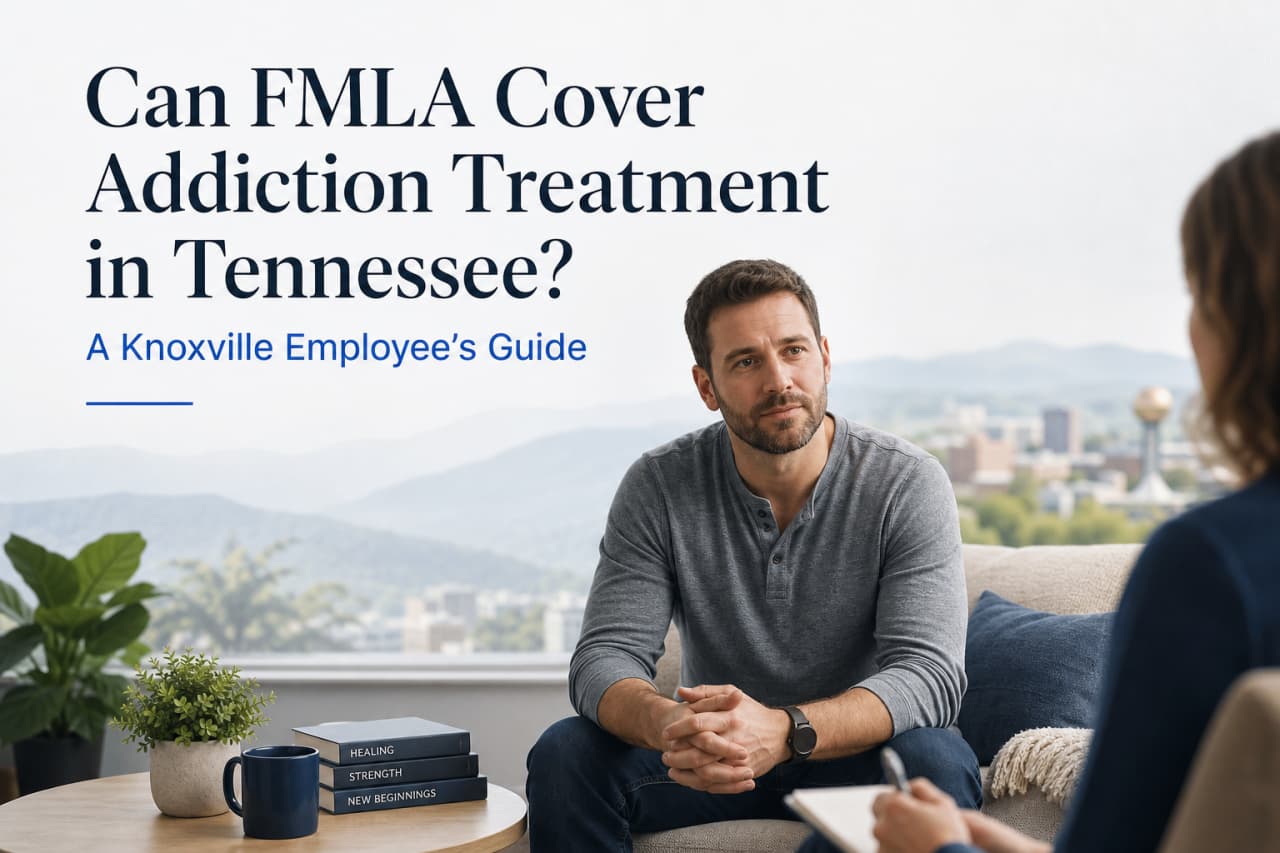
For Knoxville employees struggling with alcohol addiction, drug abuse, or other substance abuse, the fear of losing a job can make it harder to take the first step and attend rehab. Questions about the Medical Leave Act FMLA, job security, unpaid leave, health insurance benefits, and insurance coverage can add more stress when someone is already considering substance abuse treatment. This guide explains what employees should know about FMLA addiction treatment, receiving treatment, and choosing a treatment program that supports the recovery journey.
Understanding FMLA Addiction Treatment
FMLA addiction treatment refers to using qualifying leave under the Family and Medical Leave Act to receive care for a substance use disorder. Eligible employees may receive job-protected leave for treatment provided by or referred by a healthcare provider, including detox, residential treatment, intensive outpatient programs, or other outpatient services. FMLA can give workers time to focus on recovery while maintaining certain employment protections and preparing for a safer return to work.
When FMLA May Cover Addiction Treatment
FMLA may cover addiction treatment when a substance use disorder qualifies as a serious health condition and the employee meets FMLA eligibility requirements. Qualifying care may include inpatient treatment, residential treatment involving an overnight stay, or continuing treatment provided by or referred by a healthcare provider.
This may allow eligible employees to take job-protected leave to attend treatment, manage periods of incapacity related to qualifying care, and focus on recovery without leaving their job solely to enter treatment.
FMLA Eligibility and Employee Protections
An employee generally must work for a covered employer for at least 12 months, have worked at least 1,250 hours during the previous 12 months, and work where the employer has at least 50 employees within 75 miles.
Eligible employees may receive up to 12 weeks of unpaid, job protected leave, continued group health benefits, and return to the same or an equivalent job with the same pay and benefits. Separate FMLA rules may apply to specific family situations or employees of a private elementary school, while many insurance companies may provide coverage for treatment of a serious illness.
What FMLA Does and Does Not Protect
FMLA can protect eligible leave used for qualifying addiction treatment, but it does not protect every absence or workplace problem related to alcohol or drug use.
This can include misuse of opioids such as heroin or fentanyl, stimulants such as cocaine or methamphetamine, benzodiazepines and other sedatives, cannabis, and prescription medications. Employers may still enforce established substance use policies as long as those policies are applied consistently and do not interfere with valid FMLA rights.
How to Request FMLA Leave and What to Ask HR
Employees should notify their employer when they need leave for a qualifying medical reason and provide enough information for the employer to determine whether FMLA may apply. Questions to ask HR include:
- Am I eligible for FMLA?
- What forms or documentation are required?
- Can I use paid leave at the same time?
- Will my health insurance continue?
- Can I use intermittent FMLA?
- What are the return to work requirements?
- What workplace substance use policies apply?
Medical Certification, Privacy, and Confidentiality
An employer may request medical certification that provides enough information to establish the need for qualifying FMLA leave. Certification may address the expected duration of treatment, periods of incapacity, treatment schedule, and need for intermittent leave, while FMLA medical records must generally be maintained as confidential medical records.
FMLA Protection for Treatment vs. Substance Use at Work
FMLA protections depend on why an employee needs time away from work. Important distinctions include:
- Inpatient Addiction Treatment: May qualify when FMLA requirements are met.
- Residential Addiction Treatment: May qualify when it involves an overnight stay in a qualifying medical care facility.
- Outpatient Addiction Treatment: May qualify when it meets FMLA requirements for continuing treatment.
- Healthcare Provider Treatment: Treatment provided by or referred by a healthcare provider may qualify for FMLA protection.
- Absences Caused by Alcohol or Drug Use: Are not protected as substance use disorder treatment.
- Alcohol or Drug Use at Work: Is not automatically protected by FMLA.
- Workplace Substance Use Policy Violations: May result in disciplinary action when an employer applies its established policy consistently.
Addiction in the Workplace and Employment Risks
Untreated addiction can affect concentration, judgment, attendance, communication, and the ability to perform job duties safely. Alcohol or drug use may contribute to missed shifts, frequent lateness, reduced productivity, workplace conflict, poor decision-making, and difficulty completing responsibilities.
Substance use can also increase the risk of workplace accidents, injuries, policy violations, disciplinary action, and job loss. These problems may become more serious as substance use increases, which makes early addiction treatment important for protecting health, employment, and long-term recovery.
Signs and Symptoms of Substance Use Disorder
Common signs and symptoms include:
- Strong cravings
- Increased alcohol or drug use
- Difficulty controlling substance use
- Tolerance
- Withdrawal symptoms
- Using more or longer than intended
- Unsuccessful attempts to stop
- Missing work or responsibilities
- Continuing use despite health problems
- Relationship or social problems
- Giving up important activities
- Using substances in unsafe situations
Prevalence of Substance Use Disorders Among Working Adults
Substance use disorders can affect people who remain actively employed, including full time and part time workers. A person may continue working while experiencing cravings, withdrawal, declining performance, health problems, or difficulty controlling alcohol or drug use.
Effects and Risks of Untreated Addiction
Short-Term Effects
- Impaired judgment
- Poor coordination
- Reduced concentration
- Mood changes
- Sleep problems
- Workplace accidents
- Risky behavior
- Intoxication
- Overdose
- Withdrawal symptoms
Long-Term Effects
- Substance dependence
- Heart and cardiovascular problems
- Liver or kidney damage
- Cognitive problems
- Worsening anxiety or depression
- Relationship problems
- Employment and financial problems
- Repeated relapse
- Chronic health problems
- Increased risk of overdose and death
Co-Occurring Mental Health and Substance Use Disorders
Co-occurring disorders occur when a person has both a substance use disorder and a mental health disorder. Alcohol use disorder, opioid use disorder, stimulant use disorder, cannabis use disorder, and sedative use disorder can occur alongside depression, anxiety disorders, PTSD, bipolar disorder, schizophrenia, ADHD, and other mental health conditions.
Treatment may need to address both conditions because mental health symptoms, cravings, withdrawal, and substance use can affect recovery and daily functioning.
Using FMLA for Detox, Residential, and Outpatient Treatment
FMLA addiction treatment may apply to different levels of care when the employee and treatment meet FMLA requirements. Qualifying care may include inpatient detox, residential treatment involving an overnight stay in a qualifying facility, and certain outpatient services provided by or referred by a healthcare provider. This can give eligible employees time away from work to receive structured addiction treatment.
Benefits of Taking Leave for Addiction Treatment
- Time to focus on recovery
- Access to structured treatment
- Medical support during withdrawal
- Reduced exposure to workplace triggers
- Treatment for co-occurring disorders
- Development of coping skills
- Relapse prevention planning
- Job protection for qualifying leave
- Preparation for returning to work
How Much FMLA Leave Is Available for Addiction Treatment
Eligible employees can generally receive up to 12 workweeks of FMLA leave during a 12-month period for a qualifying serious health condition. Leave may be taken continuously or, when medically necessary, intermittently or through a reduced work schedule. The amount used depends on the employee's normal schedule and qualifying leave taken.
Intermittent FMLA Leave for Outpatient Addiction Treatment
FMLA leave does not always require an employee to stop working for several consecutive weeks. When medically necessary, eligible employees may use intermittent leave or a reduced schedule for qualifying outpatient addiction treatment, including recurring appointments or therapy sessions. This can help employees continue working while receiving ongoing care.
Health Insurance and Pay During FMLA Leave
FMLA leave is generally unpaid, although eligible paid sick leave, vacation time, or other employer-provided paid leave may run at the same time. Employers generally must maintain group health insurance under the same conditions as if the employee continued working, while employees remain responsible for their normal share of premiums.
Returning to Work and Preventing Relapse
Returning to work after addiction treatment can include continuing therapy, attending recovery support meetings, taking prescribed medications, managing triggers, and following a relapse prevention plan.
Eligible employees returning from qualifying FMLA leave generally have the right to return to the same or an equivalent position with equivalent pay, benefits, and working conditions.
When to Seek Help
Professional help may be appropriate when alcohol or drug use becomes difficult to control or begins affecting health, employment, relationships, finances, or daily responsibilities. Withdrawal symptoms, increased tolerance, strong cravings, repeated unsuccessful attempts to stop, risky substance use, overdose, or worsening mental health symptoms can indicate a need for assessment and treatment.
Addiction Treatment Options
Treatment depends on the substance used, withdrawal risks, addiction severity, mental health needs, and level of support required.
Medical Detox
Medical Detox provides medical monitoring and withdrawal management when stopping substance use may cause significant symptoms or health risks.
Residential Treatment
Provides structured treatment and 24-hour support in a live-in setting.
Partial Hospitalization Programs
Partial Hospitalization Programs provide intensive daytime treatment without requiring an overnight stay.
Intensive Outpatient Programs
Intensive Outpatient Programs provide structured therapy several days per week while allowing patients to live at home.
Outpatient Treatment
Provides scheduled counseling and clinical care with greater flexibility for work and other responsibilities.
Medication-Assisted Treatment
Combines appropriate medications with counseling and behavioral treatment for certain substance use disorders.
Dual Diagnosis Treatment
Dual Diagnosis Treatment addresses substance use and co-occurring mental health disorders together.
Individual and Group Therapy
Address triggers, coping skills, behaviors, relationships, and relapse prevention.
Aftercare and Recovery Support
Provide continued support after a more intensive level of treatment ends.
Does Insurance Cover Treatment?
Health insurance may cover addiction treatment, but coverage depends on the insurance plan, medical necessity, provider network, level of care, and authorization requirements. Benefits may include detox, residential care, outpatient treatment, mental health services, medications, and other substance use disorder services, so patients should verify their specific coverage before beginning treatment.
Conclusion
Seeking treatment for substance use can involve inpatient care, outpatient rehab, outpatient counseling, or another level of health care based on individual needs. Understanding federal law, FMLA regulations, health insurance coverage, the Disabilities Act, reasonable accommodations, and protections related to the Health Insurance Portability and Accountability Act can help employees ask informed questions without letting fear of losing work delay care.
Whether someone needs treatment for substance use or support for a family member, connecting with an admissions team can be a practical next step toward a supportive environment, whole person care, and lasting recovery.
Seeking Treatment? We Can Help!
At New Hope Healthcare, as an in-network provider we work with most insurance plans, such as:
If you or a loved one are struggling with mental health challenges or substance abuse, seeking treatment and emotional support is crucial.
Consulting a doctor can provide the necessary support and guidance for your teen. Reach out to New Hope Healthcare today. Our team of compassionate professionals is here to support your journey towards lasting well-being.
Effective medication management is a crucial part of the treatment process to ensure safety and success.
Give us a call at 866-799-0806.
FAQs
Can FMLA Be Used for Addiction Treatment?
Yes. FMLA may cover qualifying substance use disorder treatment for eligible employees when treatment is provided by or referred by a healthcare provider.
How Much FMLA Leave Can I Take for Addiction Treatment?
Eligible employees may receive up to 12 workweeks of job-protected FMLA leave during a 12-month period.
Does FMLA Protect Absences Caused by Drug or Alcohol Use?
Not necessarily. FMLA may protect qualifying addiction treatment, but absences caused by substance use itself may not be protected.
People Also Ask
Can I Use Intermittent FMLA for Outpatient Addiction Treatment?
Yes. Eligible employees may use intermittent FMLA when medically necessary for qualifying outpatient addiction treatment.
Do I Have to Tell My Employer My Addiction Diagnosis?
Not necessarily. An employer may request sufficient medical certification to establish the need for FMLA leave without requiring a specific diagnosis.
Will I Get Paid While Using FMLA for Addiction Treatment?
FMLA leave is generally unpaid, although eligible paid leave may sometimes run at the same time as FMLA leave.
Sources