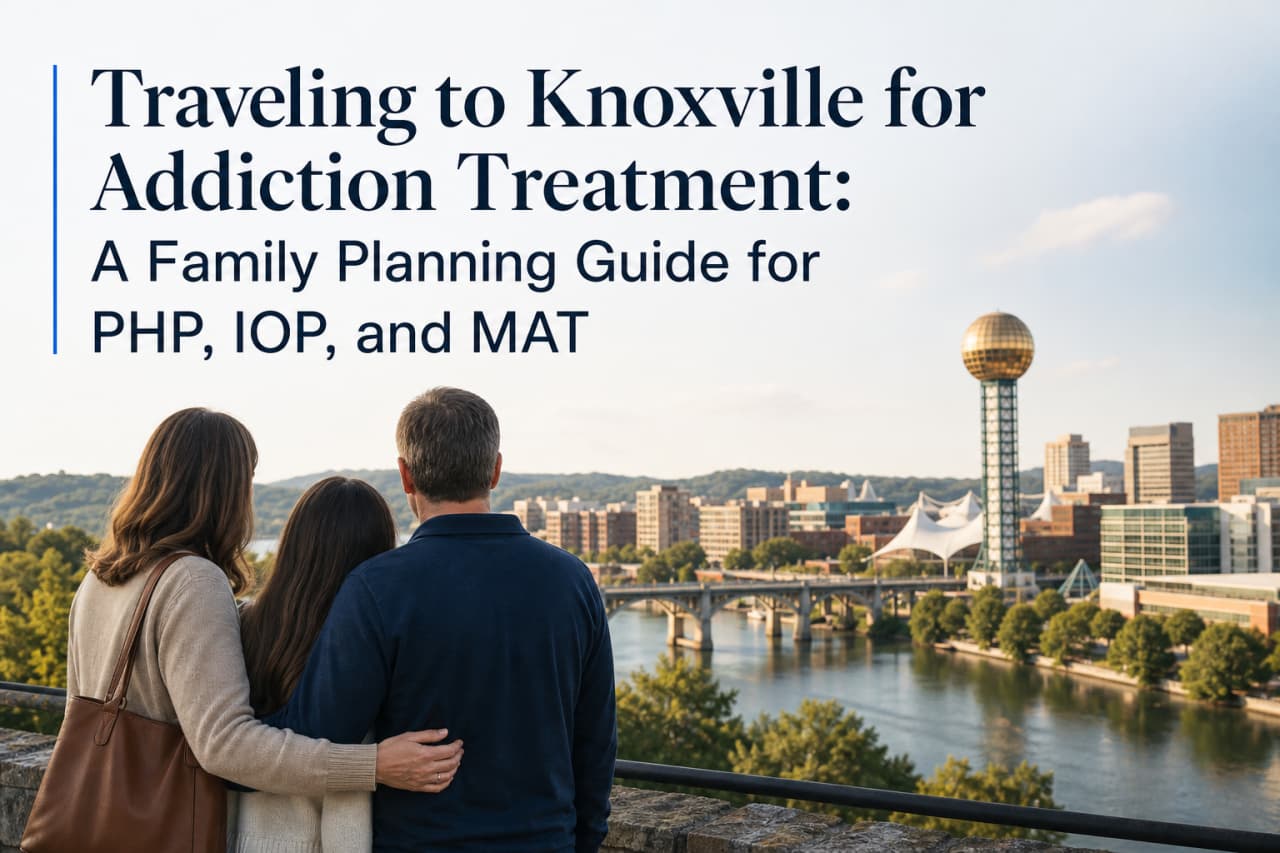
Traveling to Knoxville for Addiction Treatment: A Family Planning Guide for PHP, IOP, and MAT
Traveling for addiction treatment can feel like a major decision for both the person facing substance abuse and the family supporting them. Whether someone chooses to stay local or explore a treatment center in a new location, the right rehab depends on their unique circumstances, specific needs, home life, and the type of specialized care needed to support the recovery journey. Traveling for rehab can mean putting distance between addiction and old routines while entering a new environment focused on healing, growth, and self reflection. This guide explores rehab traveling to Knoxville and what families should consider when choosing an addiction treatment program, rehab facility, or other recovery resources.
Understanding Traveling for Addiction Treatment
Traveling for addiction treatment means leaving your home area to receive professional substance use care in another city or region. A person may travel to Knoxville to access residential treatment, PHP, IOP, MAT, or outpatient care that better matches their addiction, recovery needs, and daily responsibilities. Treatment away from home can also create distance from people, places, substances, and routines that may contribute to continued drug or alcohol use.
Travel requires planning because patients and families may need to arrange transportation, lodging, medications, work leave, childcare, and ongoing family support. A treatment provider can help determine the appropriate level of care and create a continued care plan for the transition home after treatment.
Why People Travel for Addiction Treatment
People travel for addiction treatment when appropriate care is not available close to home or when another location offers a level of care that better fits their needs. Travel may provide access to residential treatment, partial hospitalization programs (PHP), intensive outpatient programs (IOP), medication-assisted treatment (MAT), or services for co-occurring mental health disorders.
A temporary change in environment can also separate a person from routines, relationships, and locations connected to drug or alcohol use. Families should consider clinical needs, distance, cost, transportation, housing, and continued care before choosing treatment away from home.
Benefits and Potential Challenges of Traveling for Treatment
Traveling for treatment can provide access to appropriate addiction services while creating physical distance from familiar triggers and substance use environments. It may also give patients more space to focus on treatment, establish new routines, and develop coping and relapse prevention skills.
Travel can create challenges involving transportation, lodging, family responsibilities, employment, medication access, and insurance coverage. Patients receiving outpatient care also need a stable place to stay and reliable transportation to scheduled treatment sessions. Rehab centers across the country can offer many benefits for people who need treatment away from home.
Signs Addiction May Require Professional Treatment
- Inability to reduce or stop drug or alcohol use
- Strong cravings or frequent thoughts about substance use
- Increased tolerance or needing more of a substance for the same effect
- Withdrawal symptoms when substance use stops
- Continued use despite physical or mental health problems
- Problems at work, school, or home related to substance use
- Loss of interest in relationships or activities
- Using substances in dangerous situations
- Repeated relapse after attempts to stop
- Spending significant time obtaining, using, or recovering from substances
How Distance From Triggers Can Support Early Recovery
People, places, stressors, and routines associated with substance use can trigger cravings during early recovery. Traveling for addiction treatment may create temporary distance from these triggers while a person develops coping skills and learns how to respond to cravings without returning to substance use.
Distance alone does not prevent relapse. Effective treatment should help patients identify personal triggers, address the reasons behind substance use, and create a relapse prevention plan that can continue after they return home.
Planning Transportation, Lodging, and Daily Needs in Knoxville
Families should arrange transportation to Knoxville, local transportation to treatment, appropriate lodging, meals, medications, and other daily needs before care begins. Patients attending PHP or IOP may need housing near the treatment location because these programs require regular attendance without providing overnight residential care.
Families should also consider how long the patient may remain in Knoxville and what will happen if the treatment schedule changes. Planning these details before arrival can reduce disruptions and help the patient maintain consistent attendance.
How Treatment Schedules Affect Travel and Family Plans
Partial hospitalization programs require more treatment hours than intensive outpatient programs, while medication-assisted treatment may include medication management, counseling, and follow-up visits. Families should plan transportation, lodging, work, childcare, and return travel around the expected treatment schedule and length of care.
Prevalence of Traveling for Addiction Treatment
There is no single national estimate showing how many people travel specifically for addiction treatment. Travel may be more common when people live in areas with limited access to substance use treatment, specialized programs, MAT, or higher levels of care.
Treatment availability can vary significantly by location, which may require some patients to cross county or state lines for appropriate services. Distance can also become a barrier to care when transportation, lodging, cost, or family responsibilities make regular treatment difficult.
Effects and Risks of Untreated Addiction
Short-Term Effects
- Intoxication and impaired judgment
- Poor coordination and slower reaction time
- Anxiety, agitation, or mood changes
- Accidents and injuries
- Risky behavior
- Drug or alcohol poisoning
- Dangerous drug interactions
- Overdose
Long-Term Effects
- Increased tolerance and physical dependence
- Withdrawal symptoms
- Heart, liver, lung, or other organ problems
- Memory and cognitive problems
- Depression, anxiety, and other mental health symptoms
- Relationship, employment, and financial problems
- Repeated relapse and worsening substance use
- Increased risk of chronic illness, overdose, and death
How Families Can Prepare for Treatment Away From Home
Families can prepare by confirming admission details, treatment schedules, transportation, lodging, medications, finances, and time away from work or school. They should also gather identification, insurance information, prescription records, emergency contacts, and other documents the treatment provider requests.
Families should discuss communication expectations and determine who will manage responsibilities at home while treatment is underway. Planning for discharge early can also make the transition from treatment in Knoxville to continued care at home easier.
Understanding PHP, IOP, and MAT for Addiction Treatment
A partial hospitalization program (PHP) provides structured addiction treatment during the day without requiring an overnight stay. An intensive outpatient program (IOP) provides fewer weekly treatment hours and may include individual therapy, group therapy, relapse prevention, medication management, and support for co-occurring mental health conditions.
Medication-assisted treatment (MAT) combines medications with counseling and behavioral health services for certain substance use disorders. Medications such as buprenorphine and methadone may be used for opioid use disorder, while naltrexone may be used for opioid or alcohol use disorder.
Planning Continued Care and Recovery Support After Returning Home
Continued addiction care may include outpatient therapy, intensive outpatient programs, medication-assisted treatment, psychiatric care, and peer support for alcohol, opioid, fentanyl, benzodiazepine, cocaine, methamphetamine, or marijuana addiction. Patients should also plan for substance-specific triggers, cravings, relapse warning signs, and local recovery support.
Co-Occurring Mental Health Disorders and Addiction
Substance use disorders often occur with major depressive disorder, generalized anxiety disorder, post-traumatic stress disorder (PTSD), bipolar disorder, attention-deficit/hyperactivity disorder (ADHD), schizophrenia, and other psychotic disorders. Alcohol, opioids, marijuana, stimulants, and benzodiazepines can worsen or mimic mental health symptoms, while some people use substances to cope with fear, sadness, intrusive memories, sleep problems, or emotional distress.
Dual diagnosis treatment addresses addiction and mental health disorders together through individual or group therapy, behavioral therapies, medication management, and relapse prevention. Integrated care can reduce reliance on alcohol or drugs for coping and address risks such as dependence, withdrawal, and relapse.
Family Involvement and Support During Treatment
Family members can support recovery by learning about addiction, participating in approved family sessions, maintaining healthy boundaries, and avoiding behaviors that enable continued substance use. Families can also learn how cravings, withdrawal, relapse, and co-occurring mental health disorders may affect recovery.
Support should continue without placing the entire responsibility for recovery on the family. Family members may also benefit from counseling, education, or peer support while their loved one receives treatment away from home.
Relapse and Overdose Risks During Treatment Transitions
Treatment transitions can create relapse risk as patients move between detox, residential care, PHP, IOP, outpatient treatment, or their home environment. Returning to familiar triggers without a continued care plan can increase exposure to substances and situations associated with previous use.
Opioid overdose risk can be especially serious after a period of abstinence because tolerance may decrease. A relapse prevention plan, naloxone access for people at risk of opioid overdose, medication management, and prompt follow-up care can improve safety during these transitions.
Planning Continued Care and Recovery Support After Returning Home
Continued care should be arranged before leaving Knoxville and may include outpatient therapy, intensive outpatient programs, medication-assisted treatment, psychiatric care, peer support, and medication management. Patients should also identify local recovery meetings, family support, triggers, relapse warning signs, and steps to take if cravings or mental health symptoms increase.
When to Seek Help
Professional treatment may be needed when substance use causes cravings, withdrawal, repeated relapse, health problems, or difficulty meeting responsibilities. Overdose, seizures, severe withdrawal, breathing problems, suicidal thoughts, or dangerous behavior require immediate emergency care.
Addiction Treatment Options
Medical Detox
Medical Detox manages withdrawal symptoms and medical risks.
Residential Treatment
Provides 24-hour structured addiction treatment.
Partial Hospitalization Program
Partial Hospitalization Program provides structured daytime addiction treatment.
Intensive Outpatient Program
Provides intensive treatment while patients live at home.
Standard Outpatient Treatment
Provides ongoing therapy and recovery support.
Medication-Assisted Treatment
Combines medications and therapy for opioid or alcohol addiction.
Dual Diagnosis Treatment
Dual Diagnosis Treatment treats addiction and co-occurring mental health disorders.
Individual, Group, and Family Therapy
Builds coping skills and supports recovery.
Continued Care
Supports relapse prevention and long-term recovery.
Does Insurance Cover Treatment?
Many insurance plans cover substance use disorder treatment, but benefits vary for detox, residential care, PHP, IOP, MAT, therapy, and medications. Families should verify network status, deductibles, copays, prior authorization, and coverage for treatment away from home before traveling.
Conclusion
The benefits of traveling for addiction treatment can include physical separation from old routines, a fresh start, new habits, and access to personalized care that may not be available in the local area. For some people, choosing a facility away from home offers significant advantages and a new beginning, while others may benefit from keeping rehab close to their existing support system.
No single approach fits every person or explains how an addiction developed. The goal is to find a supportive environment and compassionate care that address unique needs, strengthen sobriety, and help the person attend addiction treatment with a plan for the recovery process, long-term sobriety, and lasting recovery.
Seeking Treatment? We Can Help!
At New Hope Healthcare, as an in-network provider we work with most insurance plans, such as:
If you or a loved one are struggling with mental health challenges or substance abuse, seeking treatment and emotional support is crucial.
Consulting a doctor can provide the necessary support and guidance for your teen. Reach out to New Hope Healthcare today. Our team of compassionate professionals is here to support your journey towards lasting well-being.
Effective medication management is a crucial part of the treatment process to ensure safety and success.
Give us a call at 866-799-0806.
FAQs
Why Do People Travel for Addiction Treatment?
People may travel to access a specific level of care, leave triggers behind, or find programs that better fit their recovery needs.
Can You Travel While Receiving IOP or PHP Treatment?
Yes, but patients need reliable transportation and local housing that allow them to attend all required treatment sessions.
How Should Families Prepare for Addiction Treatment Away From Home?
Families should plan transportation, lodging, finances, medications, treatment schedules, and continued care before the patient returns home.
People Also Ask
Is Traveling for Addiction Treatment Worth It?
It may be beneficial when travel provides access to appropriate care, a safer recovery setting, or specialized addiction and mental health services.
Can You Receive MAT While Traveling for Addiction Treatment?
Yes. MAT may be part of treatment for opioid or alcohol addiction, but medication access and follow-up appointments should be arranged in advance.
What Happens After Returning Home From Addiction Treatment?
Continued care may include outpatient therapy, MAT, recovery groups, relapse prevention, and local mental health support.
Sources