How Long Does IOP Last in Knoxville? A Treatment Timeline for Adults and Families
If you are considering intensive outpatient treatment for yourself or a family member, you may wonder, how long does IOP last and how treatment can fit into daily life. An intensive outpatient treatment program can provide structured therapy, substance abuse treatment, dual diagnosis support, and mental health care while allowing time for work and family commitments. This guide explains IOP duration, the typical IOP weekly schedule, session frequency, and the factors a clinical team may consider when building an individualized treatment plan.
What Is an Intensive Outpatient Program?
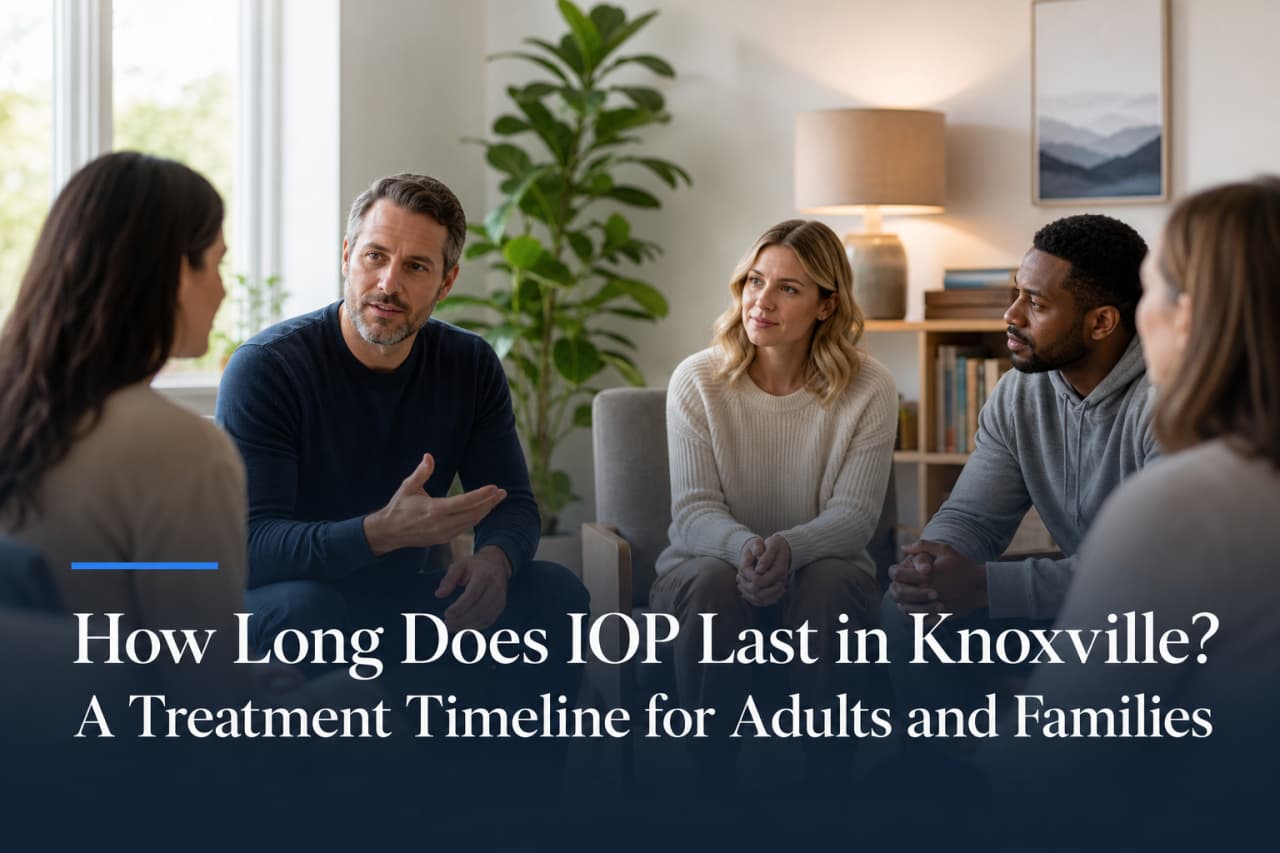
An intensive outpatient program (IOP), one of several intensive outpatient programs, provides structured addiction treatment without requiring a person to live at a treatment facility. Patients typically attend therapy several days per week while continuing to live at home, work, attend school, or manage family responsibilities in these structured outpatient programs. IOP may include individual therapy, group therapy, relapse prevention, family support, medication management, and treatment for co-occurring mental health disorders. This level of care helps adults build recovery skills while maintaining many parts of their daily routine.
How Long Does IOP Last?
An intensive outpatient program often lasts about 8 to 12 weeks, but there is no single treatment length for every person. According to SAMHSA, the average IOP duration is about 83 days, a benchmark often cited by the Mental Health Services Administration. Some adults need a shorter period of care, while others remain in IOP for several months based on addiction severity, relapse risk, mental health symptoms, and treatment progress.
Treatment length should depend on clinical needs rather than a fixed completion date. The treatment team can assess progress and determine when a patient may be ready to move to a less intensive level of outpatient care.
What Does a Typical IOP Treatment Timeline Look Like?
IOP usually begins with an assessment that identifies substance use patterns, mental health symptoms, medical needs, relapse risks, and recovery goals. Early treatment often focuses on stabilization and coping skills, and IOP typically involves multiple weekly therapy sessions that may include individual therapy, group counseling, family work, medication management, and psychoeducation before progressing into relapse prevention, relationship skills, and preparation for continued recovery.
As symptoms improve, the treatment team may reduce the level or frequency of structured care. Some patients enter IOP after residential treatment or PHP, while others begin IOP directly when they do not require 24-hour supervision, sometimes starting with more frequent sessions before treatment intensity is reduced.
How Many Days and Hours Per Week Does IOP Require?
Addiction IOP commonly provides at least 9 hours of structured treatment per week for adults, often divided across three or more days. The exact schedule can vary by program, clinical needs, and the services included in the treatment plan.
IOP sessions often last 2 to 4 hours, and structured outpatient care can reduce relapse risk while offering outcomes comparable to inpatient care for many patients at a lower cost. This schedule gives patients more support than standard outpatient treatment without requiring residential care. Evening or flexible schedules may also help adults continue working, attending school, or caring for family.
What Happens During Addiction IOP?
Addiction IOP uses structured services to address substance use, identifying triggers, cravings, relapse risk, and behaviors that can interfere with recovery. Treatment may include group therapy, individual counseling, relapse prevention, recovery education, family involvement, medication management, and medication-assisted treatment when clinically appropriate.
Patients also practice coping strategies that they can use outside treatment. This real-world practice can help patients identify problems early and discuss them with their treatment team and support system before they lead to substance use.
What Factors Affect How Long IOP Lasts?
Treatment length can depend on the substance used, severity and duration of addiction, relapse history, withdrawal concerns, physical health, home environment, and available support. Attendance, cravings, continued substance use, co-occurring mental health symptoms, and progress toward recovery goals can also affect how long IOP lasts.
Providers may adjust the treatment timeline as a patient’s needs and stability change.
How Addiction Severity and Treatment Progress Affect IOP Length
Severe addiction, repeated relapse, polysubstance use, strong cravings, or previous unsuccessful treatment attempts may require a longer period of structured treatment. Patients who develop stronger coping skills, manage triggers, attend treatment consistently, and maintain greater stability may be ready to reduce treatment hours.
The treatment team can then determine whether a step down from IOP to standard outpatient care is appropriate.
How Co-Occurring Mental Health Disorders Can Affect IOP Treatment
Depression, generalized anxiety disorder, panic disorder, post-traumatic stress disorder (PTSD), bipolar disorder, and attention-deficit/hyperactivity disorder (ADHD) can occur alongside addiction. Symptoms such as severe anxiety, depressed mood, trauma reactions, impulsivity, sleep problems, and mood instability may increase substance use triggers and require additional treatment.
Treating addiction and mental health disorders at the same time can address factors that contribute to continued substance use or relapse. Integrated IOP treatment may include therapy, medication management, coping skills, and relapse prevention based on individual needs.
Prevalence of Addiction and Co-Occurring Mental Health Disorders
Millions of U.S. adults experience a substance use disorder and mental illness at the same time. Alcohol, opioids such as heroin and fentanyl, prescription painkillers, benzodiazepines, cocaine, methamphetamine, and marijuana can be involved, while common co-occurring disorders include depression, anxiety disorders, PTSD, bipolar disorder, and ADHD.
These conditions can affect cravings, substance use patterns, relapse risk, and treatment progress. Screening for both addiction and specific mental health disorders helps IOP providers determine the level and length of treatment a patient may need.
Effects and Risks of Substance Use
Short-Term Effects
- Impaired judgment and coordination
- Increased risk-taking
- Anxiety, panic, or paranoia
- Mood and behavior changes
- Memory and concentration problems
- Nausea or vomiting
- Accidents and injuries
- Dangerous drug interactions
- Overdose or alcohol poisoning
Long-Term Effects
- Substance use disorder and dependence
- Increased tolerance
- Withdrawal symptoms
- Heart, liver, lung, or kidney damage
- Cognitive and memory problems
- Depression and anxiety
- Worsening co-occurring mental health disorders
- Relationship and employment problems
- Repeated relapse
- Increased risk of fatal overdose
Benefits of IOP for Addiction Recovery
- Provides structured treatment while patients live at home
- Builds coping and relapse prevention skills
- Helps patients manage cravings and triggers
- Includes individual and group therapy
- Addresses co-occurring mental health disorders
- Supports a gradual transition to outpatient care
How IOP Helps Reduce Relapse and Overdose Risk
IOP helps patients identify triggers, manage cravings, build coping skills, and create a relapse prevention plan. Regular treatment can also identify changes in substance use or mental health before they lead to relapse.
Drug tolerance can decrease during abstinence, which may increase overdose risk if a person returns to previous amounts. IOP can provide education, medication support, and overdose prevention planning.
How IOP Supports Work, Family, and Daily Responsibilities
IOP allows patients to live at home while receiving structured addiction treatment. Many programs offer schedules that allow patients to continue working, attending school, parenting, and managing other responsibilities.
Patients can also practice recovery skills between sessions. Problems that occur at home or work can then be addressed during treatment.
How Medication-Assisted Treatment Can Fit Into IOP
Medication-assisted treatment can combine medication with counseling and behavioral therapy for certain substance use disorders. Medications for opioid or alcohol addiction may help reduce cravings, withdrawal symptoms, and continued substance use.
Medication management can work alongside group therapy, individual counseling, and relapse prevention. The specific approach depends on each patient's clinical needs.
How Patients Step Down From Residential Care or PHP to IOP
Patients may enter IOP after residential treatment or a partial hospitalization program (PHP). This step-down process reduces treatment intensity while maintaining regular support during recovery.
Medical stability, cravings, substance use, mental health symptoms, relapse risk, and the home environment can affect when this transition occurs. IOP then allows patients to apply recovery skills to everyday life.
When Patients Can Step Down From IOP to Outpatient Care
Patients may move to standard outpatient care after showing consistent progress and greater stability. Reduced cravings, regular attendance, stronger coping skills, stable mental health symptoms, and lower relapse risk can indicate readiness.
The decision should reflect individual progress rather than a fixed completion date. Continued outpatient therapy can help maintain recovery after IOP.
What Happens After IOP Ends?
After IOP, patients may continue individual therapy, group counseling, medication management, peer support, or other outpatient services. A continuing care plan can also identify triggers, a support system, appointments, and steps to take if symptoms return.
Ongoing support can help patients maintain the skills and routines developed during IOP.
How to Choose an IOP in Knoxville
Look for a Knoxville IOP that provides licensed addiction services, individualized assessments, evidence-based therapy, relapse prevention, and care for co-occurring mental health disorders. Scheduling, insurance coverage, medication services, family involvement, and available levels of care are also important factors.
The program should assess each patient before treatment and adjust the level of care as recovery needs change.
When to Seek Help
Professional treatment may be needed when alcohol or drug use causes cravings, withdrawal, repeated attempts to quit, relationship problems, poor work performance, risky behavior, or worsening mental health. Overdose, severe withdrawal, suicidal thoughts, or psychosis require immediate medical attention.
Addiction and Mental Health Treatment Options
Medical Detox
Medical Detox provides medical support for withdrawal and related health risks.
Residential Treatment
Provides structured addiction care in a live-in setting.
Partial Hospitalization Program
Partial Hospitalization Program provides intensive daytime treatment without an overnight stay.
Intensive Outpatient Program
Intensive Outpatient Program provides structured weekly treatment while patients live at home.
Outpatient Treatment
Provides less frequent therapy for patients with greater stability.
Medication-Assisted Treatment
Combines medication with counseling for certain substance use disorders.
Dual Diagnosis Treatment
Dual Diagnosis Treatment treats addiction with conditions such as depression, anxiety, PTSD, and bipolar disorder.
Does Insurance Cover Treatment Options?
Many insurance plans cover substance use and mental health treatment, but benefits vary by plan and level of care. Coverage may depend on medical necessity, network status, deductibles, copays, referrals, and prior authorization.
TennCare may also cover IOP and other behavioral health services when eligibility, provider, medical necessity, and authorization requirements are met.
Conclusion
Most IOP programs use frequent sessions, relapse prevention strategies, support groups, and aftercare planning to provide consistent support for long term recovery. Early in care, treatment often involves more frequent sessions, then shifts to standard outpatient therapy with less intensive scheduling as clinical progress improves and the focus changes based on mental health conditions, mental health issues, alcohol use disorder, substance abuse, and other individual needs.
IOP programs can also serve as a step between inpatient care or inpatient treatment and less intensive services. A treatment center or admissions team can review behavioral health benefits and help determine whether inpatient programs, addiction medicine, intensive outpatient treatment, or another treatment program fits the person's current needs.
Seeking Treatment? We Can Help!
At New Hope Healthcare, as an in-network provider we work with most insurance plans, such as:
If you or a loved one are struggling with mental health challenges or substance abuse, seeking treatment and emotional support is crucial.
Consulting a doctor can provide the necessary support and guidance for your teen. Reach out to New Hope Healthcare today. Our team of compassionate professionals is here to support your journey towards lasting well-being.
Effective medication management is a crucial part of the treatment process to ensure safety and success.
Give us a call at 866-799-0806.
FAQs
How Long Does IOP Usually Last?
IOP often lasts several weeks to a few months, depending on addiction severity, progress, and treatment needs.
How Many Hours a Week Is IOP?
IOP often meets several days per week for multiple hours per session.
What Happens After Completing IOP?
Patients may step down to outpatient therapy, medication management, peer support, and other continuing care.
People Also Ask
Is IOP Considered Intensive Treatment?
Yes. IOP provides structured addiction treatment while allowing many patients to continue living at home.
Can You Work While Attending IOP?
Yes. Many IOPs offer schedules that allow patients to continue working, attending school, or caring for family.
Can IOP Treat Addiction and Mental Health Disorders Together?
Yes. IOP can address substance use alongside co-occurring conditions such as anxiety, depression, and trauma.
Sources